
Websites for CNC machine shops that bring in RFQs
Buyers send the same drawing to several shops at once and go with the shops that make it easy. We build the site that shows what you can machine, takes the drawing in one step, and puts every RFQ in your CRM.
What a buyer checks before sending a drawing
An engineer or a buyer decides in a few minutes whether a CNC machining company is worth an RFQ. They look for:
Processes
3-, 4- and 5-axis CNC milling, CNC turning, Swiss-type turning, EDM, grinding.
Materials
Aluminum, stainless steel, titanium, tool steel, brass and engineering plastics such as PEEK and Delrin.
Tolerances and part envelope
How tight you hold and how large a part fits your machines.
Volumes
Prototypes, low-volume runs, production.
Quality
ISO 9001 or AS9100 certification, ITAR registration, CMM inspection, first article inspection reports.
Secondary operations
Anodizing, plating, heat treat, assembly, in-house or through partners.
Lead times
Production lead times and prototype turnaround times.
Industries served
Aerospace, medical, defense, energy, automotive.
If these facts live only in a downloadable PDF equipment list, or not at all, the buyer moves to the next shop. We give each one a place on the site, written in the words buyers search.
conversion, return on ad spend or revenue, for four clients
projects since 2015
on Clutch for web design for manufacturing companies in Texas
Where machine shops lose RFQs
A list of machine models and machine specifications doesn’t tell a buyer whether you can hold ±0.0005" on a titanium part. The site has to say what you make, from what, and how precise.
No obvious place to send a drawing, a form that doesn’t fit a quote request, an error on submit, a slow page. A buyer is asking several plants for quotes at once and won’t stop to figure out yours.
The shop that answers first often gets the job. A drawing that sits overnight in info@ can lose it.
An RFQ form built for machining
Every shop quotes differently, so the form follows how you quote. We agree its fields with the person who prices the work. Usually it asks for:
The drawing or CAD files
STEP, IGES, DXF, PDF, uploaded with the request, so an engineer can price it straight away.
Material and finish
Quantity and annual volume
Critical tolerances or features
The date the parts are needed
An NDA
When the buyer asks for one.
Serious buyers have these at hand. The fields mostly filter out requests you couldn’t quote anyway. Bots are stopped before a request reaches you, and every RFQ arrives in your CRM with the page and the source it came from, with an alert to the person who quotes. The RFQ link sits in the navigation on every page, and the form works on mobile devices as well as on a desktop.
Pages that get a machine shop found
Good manufacturing website design starts with the searches buyers actually run. Broad searches such as “CNC machine shop” are crowded by national directories. Buyers who are ready to send a drawing search narrower: a process, a material, an industry, a certification, a place. So the site gets:
A page for each process
CNC milling, CNC turning, 5-axis machining, Swiss turning.
A page for each material you machine often
For example titanium or PEEK.
A page for each industry you serve
With the industry certifications its buyers ask for.
Your location in plain words
For buyers who want a shop within driving distance.
The same facts go into one consistent company description across the directories that ChatGPT and Google’s AI answers read. We check which assistants name you and for what. Nobody can promise a place in AI answers; this is how you give them the facts to work with. We wrote up what we see in these answers: How buyers find suppliers in ChatGPT.
Our manufacturing work

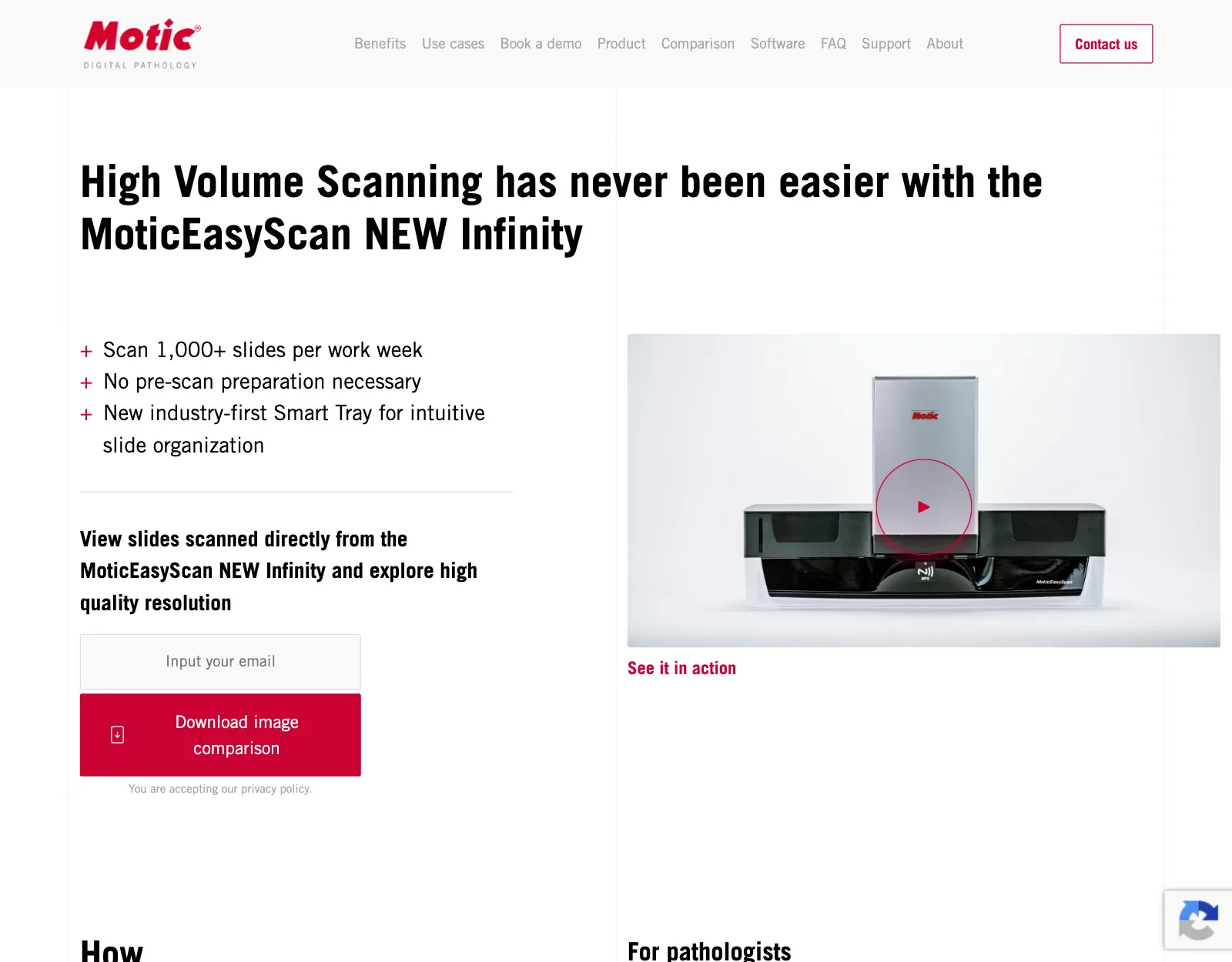
For Motic, the new pages converted 3× better than the previous product pages.
Read the caseWe’re currently building the website for a control panel manufacturer in Georgetown, Texas.
Pricing
The price is fixed in writing before you pay anything. Stop after any stage and keep the work you paid for.
Discovery
We study your shop, your buyers and what Google and AI show for what you make, then agree the site map and the RFQ path. A written strategy that’s yours to keep. Credited to the website if it starts within 30 days.
RFQ website
Process, material and industry pages, an RFQ form that takes drawings, CRM alerts and call tracking. The site, the code and every account in your company’s name.
After launch, optional
Visibility in Google and AI answers for your capabilities, and ads when you need to keep the spindles busy.
Google Ads from $1,000/month.
You ask,
we answer
- How much does a manufacturing website cost?
Our RFQ websites start at $7,500. Most manufacturer projects land between $15,000 and $20,000, depending on how many capability, equipment and industry pages you need, the catalog, and the integrations with your CRM or ERP. Discovery ($1,200) fixes the scope and the price in writing before the build starts.
- Can buyers upload drawings and 3D models with the request?
Yes. The form takes STEP, IGES, DXF and PDF files with the request, so the person who quotes has everything in one place. We agree the fields with them before launch and test the form with a real request.
- Who writes the capability pages?
You know your machines, materials and tolerances; we know how buyers search for them. We talk it through with you or your engineer and build the key pages from your material. Repeating pages, such as one per material, come as templates you can fill and extend. If you want us to write everything from scratch, that’s quoted separately.
- We already get most work from repeat customers. Why invest in the website?
Repeat work keeps the shop busy until a big customer cuts orders or moves a part to another supplier. New RFQs are what fill that gap, and a buyer who has never heard of you checks your site before sending a drawing. More of them now ask ChatGPT or Google for a shortlist first, and a shop whose site doesn’t show what it makes isn’t on it.
- Where are you based, and do you work with shops outside Texas?
We’re in Leander, just north of Austin, and we work with manufacturers across the US. In Central Texas, we can meet at your plant.