Manufacturing website design that turns buyer searches into qualified RFQs
We design manufacturing and industrial websites for manufacturers, machine shops and industrial companies: capability pages, equipment and certifications, and an RFQ path that fits how you quote. For manufacturers across the US: we build and run the whole path, from your name in Google and AI answers to a qualified RFQ in your CRM. One founder-led team answers for all of it, at a price fixed in writing.
Top 3 on Clutch for web design for manufacturing companies in Texas
on Clutch for manufacturing web design in Texas
conversion at a global optics manufacturer’s US launch
parts in one catalog, found by part number
Where RFQs get lost
Machine shops, contract manufacturers and makers of industrial equipment lose RFQs in the same four places.
AI and Google shortlist your competitors
Engineers and buyers ask ChatGPT and Google who can make a part. If your capabilities aren’t written the way they search, the shortlist forms without you. See our study.
The site doesn’t prove you can make it
Processes, equipment, materials, tolerances, certifications: the facts an engineer checks before sending a drawing are missing or buried in a PDF.
The RFQ path is unclear or broken
No obvious place to send a drawing, a form that doesn’t fit a quote request, an error on submit, a slow page. A buyer is asking several plants for quotes at once and won’t stop to figure out yours.
Requests wait in a shared inbox
Buyers often go with the supplier who answers first. A request that sits overnight in info@ can lose the job.
The problem isn’t your product. It’s the path from a buyer’s search to your quote.
One path, from search to RFQ
Five steps between a buyer’s search and a quote from your team. We build and run each of them.
- Found
Your capabilities on Google and in AI answers. A page for each process, material and industry you serve, in your buyers’ words. One consistent description of your company across the directories AI reads.
- Trusted
The proof an engineer checks: capability, equipment and certification pages, and the projects and parts you’ve made.
- Requested
An RFQ form that screens. It asks for the drawing, quantity, annual volume and deadline, with an NDA on request, so empty requests filter themselves out.
- Answered
Every RFQ goes into your CRM the same minute, with an alert to the person who quotes. Calls are tracked the same way, so nothing sits in a shared inbox.
- Measured
Every form and call is tagged with its source in your CRM. You see how many RFQs came in, how many were worth quoting and where each one came from.
A lab manager and a hospital administrator weigh the same scanner for different reasons. A site that speaks to neither loses both. For Motic we built a landing page for each audience, around what that buyer decides on, and the new pages converted 3× better than the previous product pages.
Run a machine shop? See websites for CNC machine shops. See also SEO for manufacturers.
What good manufacturing and industrial website design includes
Engineers, buyers and the people who sign off often check the same site during a long sales cycle, and each decides in a few minutes. These are the eight things they look for. On the manufacturing websites we design, each one has its place:
What you make, on the homepage
Products, processes and the industries you serve, in plain words on the first screen, not a slogan.
A page for each capability
Processes, materials, tolerances and part sizes: industry-specific content written the way engineers search for it.
Equipment and certifications
The machine list and your ISO, AS9100 or UL certificates where a buyer can read them, not only in a PDF.
Proof from real work
Photos or videos of parts and projects, the industries you serve, and customers you’re allowed to name.
Specs and files to take away
Spec sheets, catalogs and CAD files an engineer can share with the team.
A quote path that fits your work
An RFQ form that takes drawings and STEP files, asks what you need to quote, and says when you’ll reply.
Fast, clear on a phone
A short menu by product and capability, pages that work on a phone and load in seconds. Buyers check suppliers between meetings.
Search for large catalogs
Part-number search and filters when you sell thousands of parts, as we built for DEQST’s catalog of more than 5,000 parts.
Our projects
Since 2015 we have built websites, landing pages and campaigns for manufacturers, from a medical scanner launch to a 5,000-part catalog.
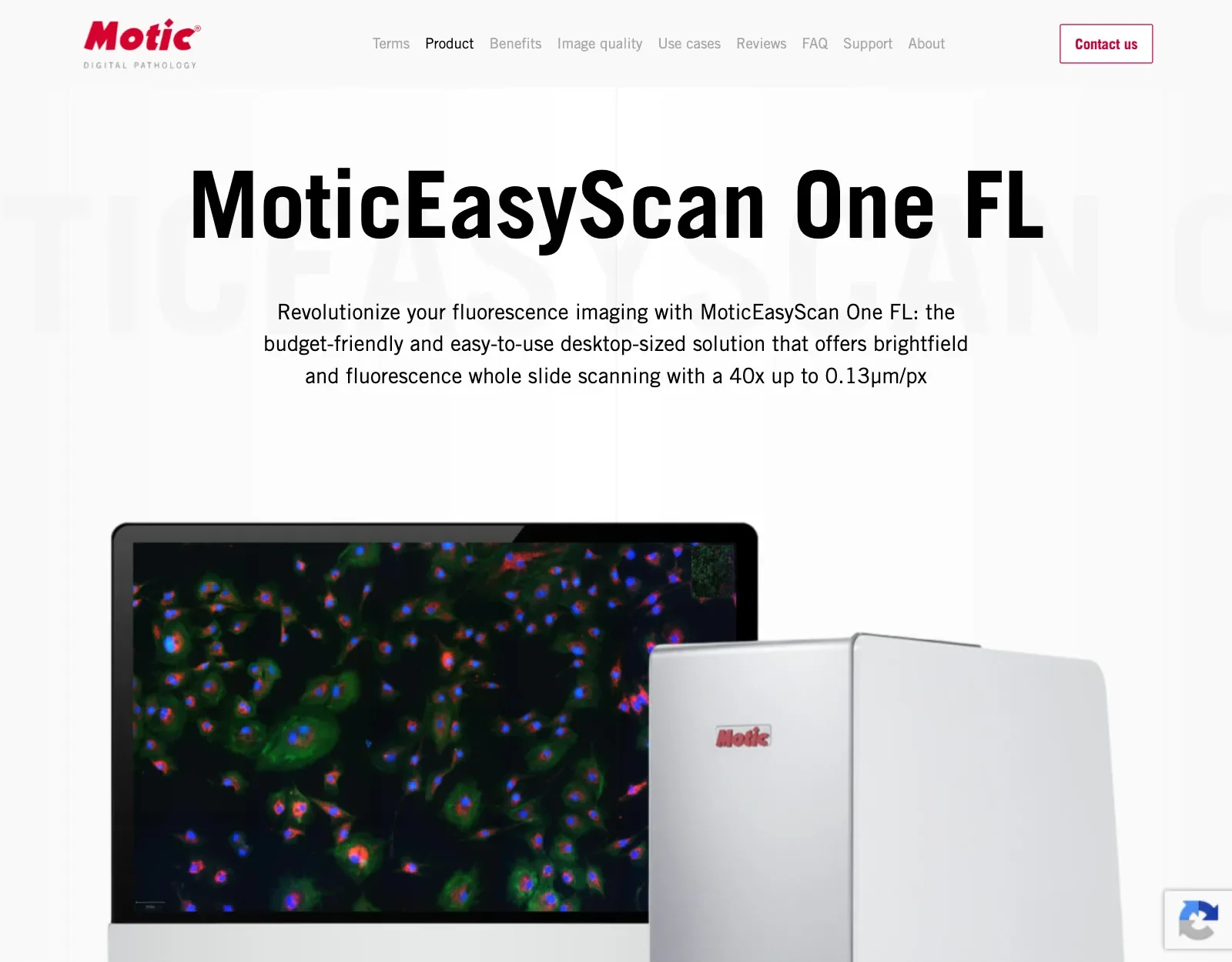
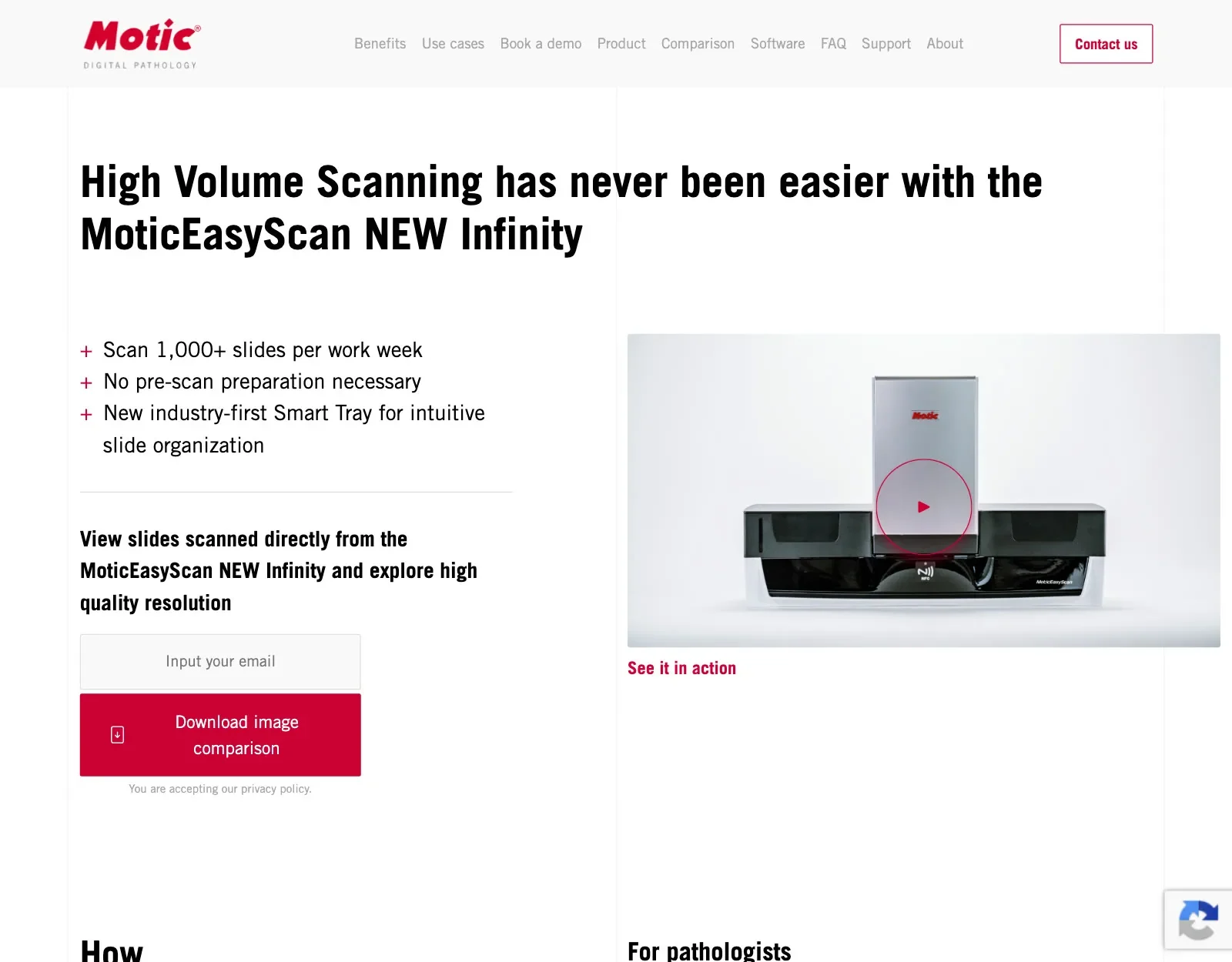
A medical scanner line launching in the US: landing pages for four audiences with Salesforce and Mailchimp connected, at 3× the conversion of the previous product pages.
Mr. Tesov and the Uwindi Team were very supportive. Based on our very positive experience, we will definitely expand the areas of our cooperation.

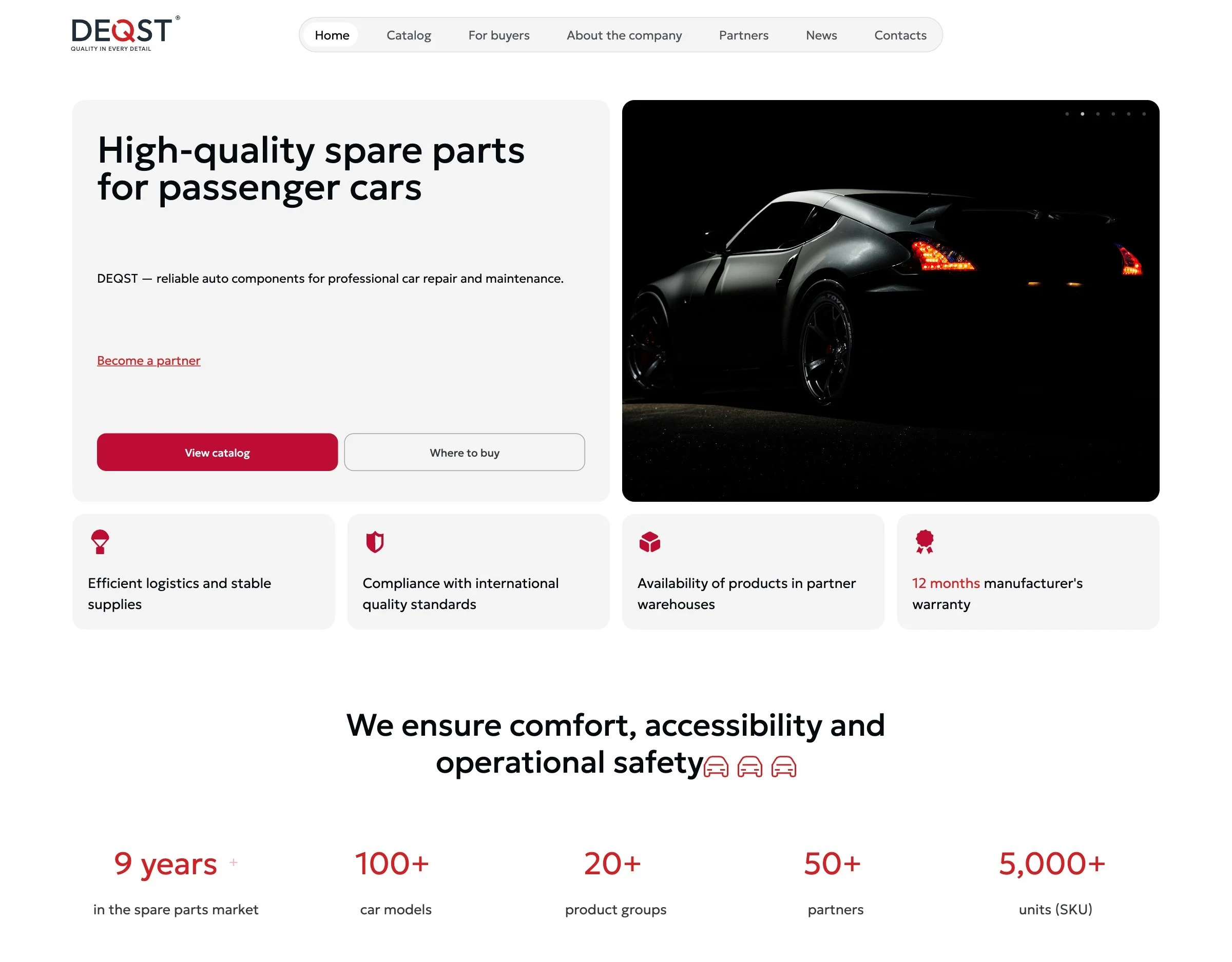
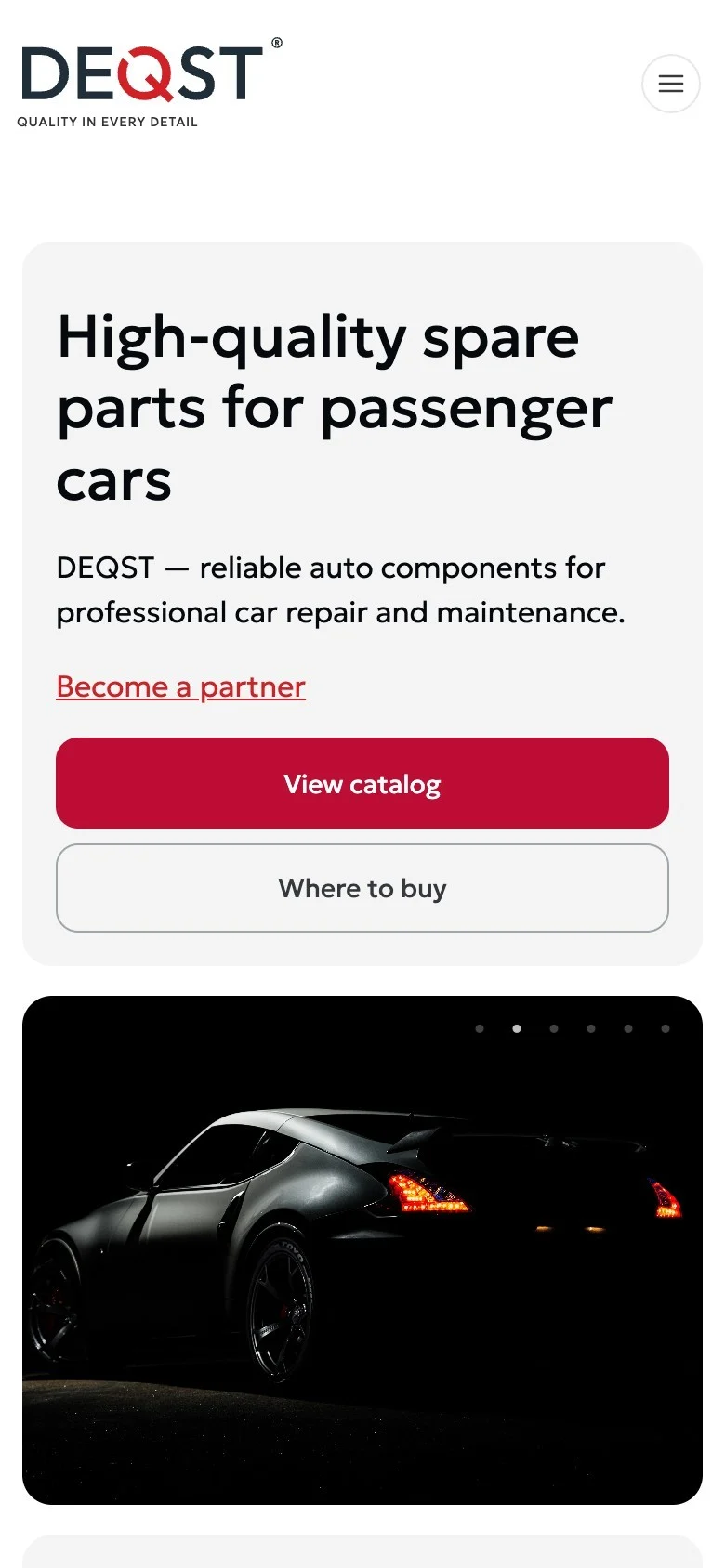
An auto parts maker’s catalog by vehicle system, with part-number search: 5,000+ parts
I’m comfortable working with the Uwindi team. They answer all my questions clearly and on time, and when there’s a misunderstanding, they meet me halfway. I’m happy with the work.
We’ve also built for a contract machining shop and a cast-iron pipe manufacturer: about $900K in pipeline in the first month on an ad budget under $10K.
We’re currently building the website for a control panel manufacturer in Georgetown, Texas.
How we build your B2B lead generation system
We start every project with the numbers. Discovery takes about a week; the whole site, 8–10 weeks from kickoff. Stop after any stage and the work you paid for is yours.
We study your buyers, your market and your current site, and do the payback math: your average deal, what a request will cost, and when the site pays off.
A written strategy: the payback math, the site map, how we position your services, a map of who holds your accounts, and what comes first. If the numbers don’t work, we tell you before anything is built. It’s yours whether or not you continue, and the $1,200 counts toward the site if it starts within 30 days.
We draft the key pages from what you already have: your presentations, your emails and our discovery call.
You add what only you know. We edit your content and finish it together.
We set the style first, then design every page.
You approve the design before we build it. Edits are included; most projects need one or two rounds.
We build the site and redirect every old address, so links and search results keep working.
You get a walkthrough of the admin, so your team edits the site without a developer. The site, the code and every account are yours.
We support the site for a month at no charge and fix build defects for a year. After that, a care plan, SEO and ads are optional.
You keep one team for the site and its marketing. Most clients stay with us for years.
Useful before you hire anyone
The price is fixed in writing before you pay anything.
Stop after any stage; every account stays in your name.
Pricing for manufacturers
A paid week of strategy first, then the site: priced for manufacturers without a marketing department.
Every project is scoped individually. Here’s where to start.
Discovery
We talk through your business, study your competitors and what Google and AI show for what you make, do the payback math (your average deal, what an RFQ will cost, when the site pays off), and agree the site map and the path to an RFQ. You also get a map of your accounts: who holds your domain, hosting, ads and analytics, and how to bring them under your name. Yours to keep; you can stop here if you want.
RFQ website
Capability, equipment and certification pages, an RFQ form that screens out spam and empty requests, CRM alerts and call tracking. The site, the code and every account are in your company’s name. Most manufacturer projects are $10,000–20,000; $7,500 covers a focused site. Large product catalogs and CRM or ERP integrations are scoped in Discovery.
After launch, optional
Visibility in Google and AI answers for your capabilities, and ads when you need to fill capacity. Content is priced separately; a national program with content starts at $3,500. See manufacturing marketing.
Google Ads from $1,000/month.

Tells it like it is, doesn’t allow you to waste any time going down the wrong road.

Uwindi’s team is quick to respond via BaseCamp and phone for urgent matters.

Small tweaks he recommended that would make a large difference.

The site looks like us, not like a template.
Right after launch we started getting real booking requests from homeowners and property managers.
 Michael BrockFounder & CEO, Pristika
The Uwindi team did a great job … If you need a landing page to bring your ideas to life – you’ve found the place.
 Myles GoldenCEO, Digital Wizards
You ask,
we answer
- What is Discovery, and why is it paid?
It’s the first stage of the project, about a week. We talk through your business and your buyers, study your competitors and what Google and AI show for what you make, do the payback math (your average deal, what an RFQ will cost, when the site pays off), and agree the site map and the path to an RFQ. You get it as a written strategy, and it’s yours whether or not you continue. It includes a map of your accounts: who holds your domain, hosting, site admin, email, Google Analytics, Search Console, Google Ads, your Google Business Profile, call tracking numbers and CRM; what’s already yours, and how to take back what isn’t. Moving accounts is priced after the map, because not everything can be moved. The first call, before any of this, costs nothing. The fee counts toward the website if it starts within 30 days.
- How much does a manufacturing website cost?
Our RFQ websites start at $7,500. Most manufacturer projects are $10,000–20,000, depending on how many capability, equipment and industry pages you need, the catalog, and the integrations with your CRM or ERP. Discovery ($1,200) fixes the scope and the price in writing before the build starts.
- What should a manufacturing company website include?
What you make on the first screen; a page for each capability with processes, materials and tolerances; your equipment list and certifications where a buyer can read them; photos of real parts and projects; spec sheets and files to take away; and an RFQ form that takes a drawing and asks for quantity and deadline. In our study of Texas manufacturers, the companies ChatGPT named listed their certifications far more often than the wider sample, and most of the sources it cited were the companies’ own pages, usually a specific capability page. Point by point for machine shops: the CNC machine shop website checklist.
- What does the RFQ form ask, and won’t it put buyers off?
It asks for what you need to quote: a drawing or spec, quantity, annual volume, deadline, and an NDA on request. Serious buyers have these at hand. The questions mostly stop the requests you couldn’t quote anyway. We agree the fields with the person who quotes.
- Will spam and fake RFQs still get through?
The form screens out bots before a request reaches you: a hidden trap field and Cloudflare Turnstile, with no puzzle for a real buyer. A person can still type a sales pitch into any form. Here it is easy to spot, because every request has to name the part, the quantity and the deadline, and arrives with the page and the source it came from.
- How do you measure success?
In RFQs: how many came in, how many were worth quoting and where each came from. Every form and call is tagged with its source in your CRM, so you see it yourself, not in pageviews or rankings alone.
- Can you get us into ChatGPT and Google’s AI answers?
Nobody can promise that. We write your capabilities the way buyers ask, keep your company’s description consistent across the directories AI reads, and check which assistants name you and for what. We wrote up what we see in these answers: How buyers find suppliers in ChatGPT.
- We mostly sell through distributors. Do we still need this?
Yes. Buyers research a category online before they call a distributor. If your site isn’t there to prove what you make, you may never reach the shortlist your distributor quotes against.
- Can RFQs go straight into our CRM?
Yes. We’ve connected forms to Salesforce, HubSpot, Mailchimp and Zapier, so every request reaches your sales workflow with its source attached.
- Do I need a new website, or can you fix the one we have?
Discovery answers that. Sometimes capability pages and a new RFQ path on your current site are enough. Sometimes a rebuild costs less than patching. You get the honest call in writing.
- Who owns the site, the accounts and the RFQs?
Your company does. Your domain, site, code, analytics, Google Business Profile and ad accounts are registered to you before launch, and every RFQ lands in your CRM. When we run your marketing, call-tracking numbers and call recordings are in your name too. You get every login and an admin walkthrough. The site passes to you with the final payment, with no buyout fee. If you leave website care, you keep every login and can move the site with any team; if you’d rather we move it, that’s a small one-time fee. SEO and ads run month to month after the first three months, and website care is month to month from the start, each with 30 days’ notice.
- How soon do RFQs come in?
Ads bring requests sooner; search and AI visibility build over months. Your CRM shows every request and its source, so you’re never guessing.
- Where are you based, and do you work with manufacturers outside Texas?
We’re in Leander, just north of Austin, and we work with manufacturers across the US. In Central Texas, we can meet at your plant.