Commercial real estate website design that leases and sells space
We design websites for developers and owners of industrial parks, warehouse complexes and commercial property. The site answers what a tenant or buyer asks before the first call: where the property is, what’s available, the rate, the floor plans and the building specs. When those answers are on the page, the people who reach out already know the space fits.
IC Park: about 248,000 sq ft sold in eight months, before construction finished · MLP: a record 97% occupancy · 150+ projects since 2015
Who checks a commercial property website
Tenants
Operations and real estate managers comparing several buildings at once. They check location and access, the size of available units, clear height, power, docks, the rate and when they can move in. If your site doesn’t answer, they call the next property on their list.
Buyers and investors
People buying units or committing money before the building is finished. They look at the project, the developer’s earlier projects, the financing on offer, the price and the timeline.
Brokers
Tenant-rep brokers bring many of the larger tenants. They need current availability and a brochure they can forward without calling you first. For MLP we built a system that sends brokers current availability in two clicks.
What a commercial real estate website needs
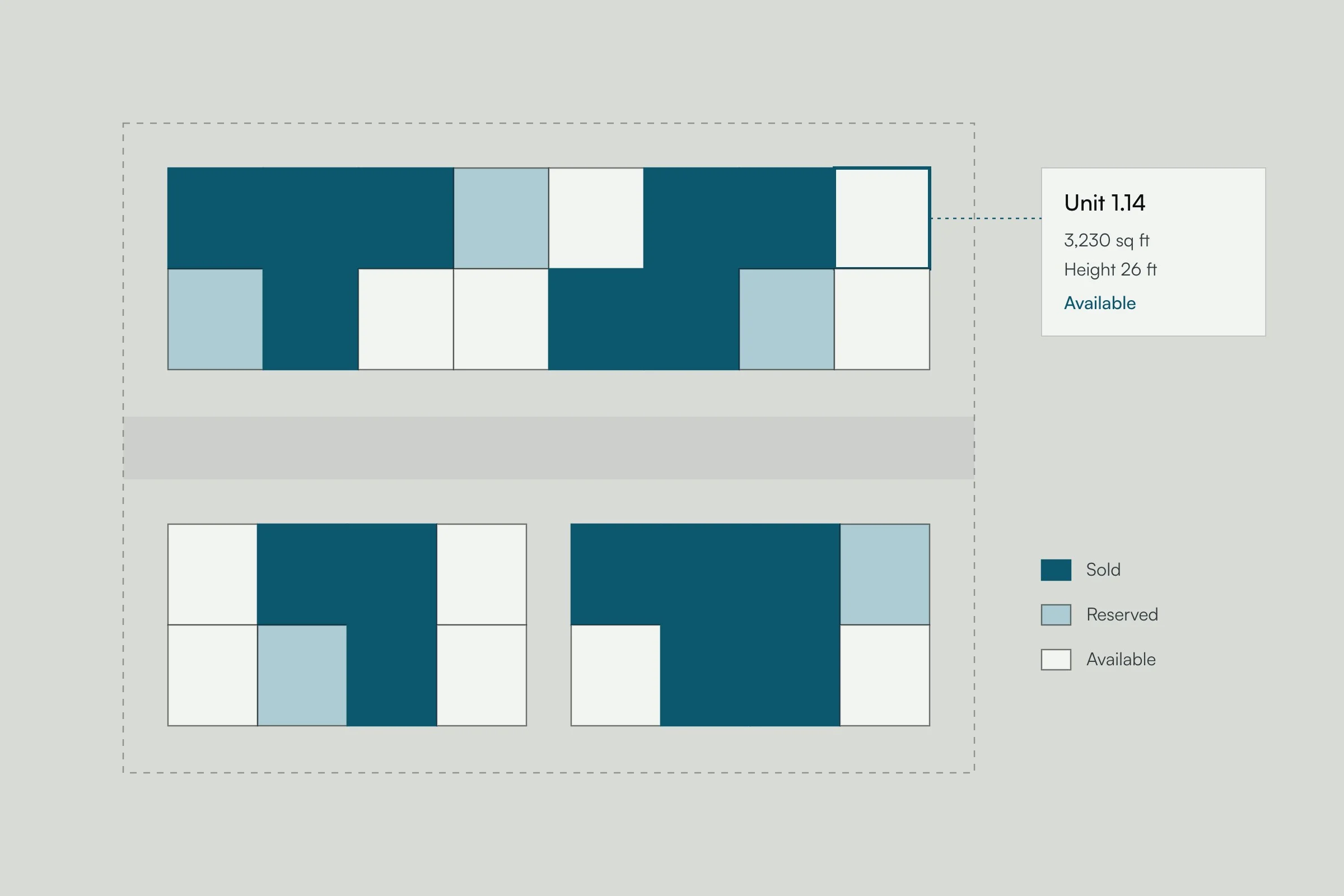
Available space on a map and in a list
Every unit with its size and status, park by park, on an interactive map, with a list of active listings under it that visitors can filter by size, building or status. For IC Park the map was synced with the CRM, so managers never updated availability by hand.
A rate on the page
Show the rate, or at least a “from” rate. Without a price fewer people get in touch, and the ones who do ask the same first question. Tenants have a budget: someone looking for Class C space and someone looking for Class A both know roughly what to expect. Say whether the rate is gross or NNN, so a tenant can work out the total monthly cost.
The specs tenants ask on the first call
Clear height is asked every time. A manufacturer also asks about power supply and whether there’s an overhead crane. Others ask about zoning, security, temperature control, and rooms that can be used for offices or other purposes. Pharmaceutical companies ask about licenses, and cold storage is chosen by a different set of parameters altogether. Docks are standard on most US industrial buildings, so list them, but they won’t set you apart.
Clear height also tells you who to write for. Large distribution tenants look for 35–40 ft; an older building with 14–16 ft fits contractors, service companies and inside storage. The site says who the building suits.
Video and drone footage first
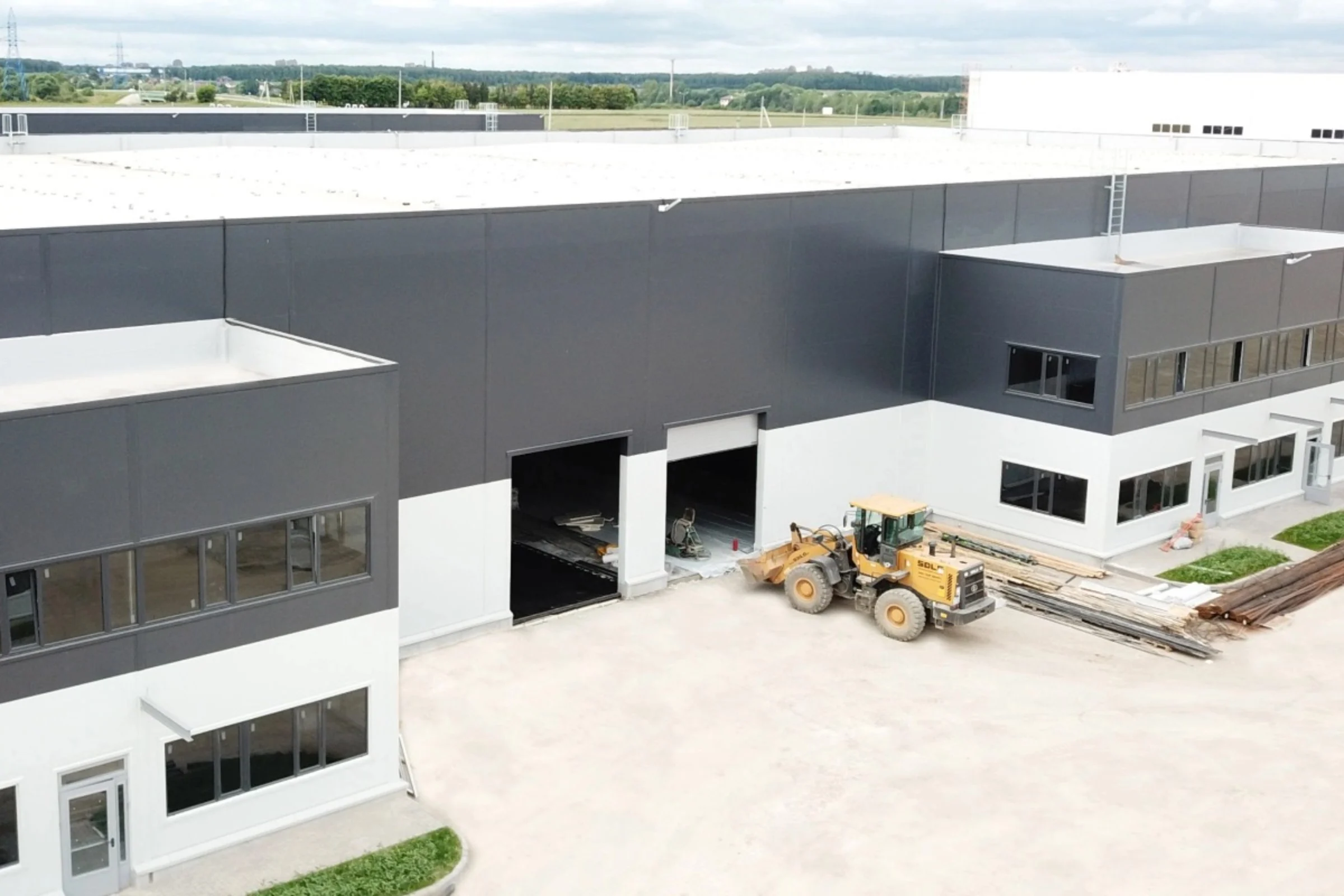
Video comes first: drone footage of the site and the surroundings shows the quality of the space and the roads around it. A 3D tour is a nice extra; tenants usually book a visit once the specs, the visuals and the rate fit.
Location and access
The exact address, a map, access roads, and the drive to the highways and the nearest metro area. These are the questions people otherwise ask by phone.
A request form that tells your team who is calling
A short form that asks for the area needed, the lease term, the type of business, and the company with its registered LLC. Your leasing team knows who it is talking to before calling back. Reply within five minutes: every minute without an answer lowers the chance that the inquiry turns into a tour.
A broker section
Brokers are one more sales channel. Give them a page with current availability, a general presentation and a flyer for each property they can download. Commission terms stay one to one.
Investor presentations
For selling or pre-leasing before completion, the site shows the project, what early buyers get (the pick of the units and the construction-stage price) and proof from projects the developer has already delivered. We also design investor presentations and offering memorandums to your brief, in the same style as the site, and they can sit behind a short form so your team sees who downloaded them.
One site for the company, a page for each property
IC Park had one large site with a full landing page for each property. Properties can differ a lot, so each one needs its own page with its specs, access routes and equipment, where tenants can find exactly what that building offers.
For a portfolio with several tenant types, the same page can speak to each of them. For MLP we built a multi-landing system inside the main website: the content changed for transportation, pharmaceutical and retail tenants, with A/B tests of the offers running in the background.
Keeping availability current
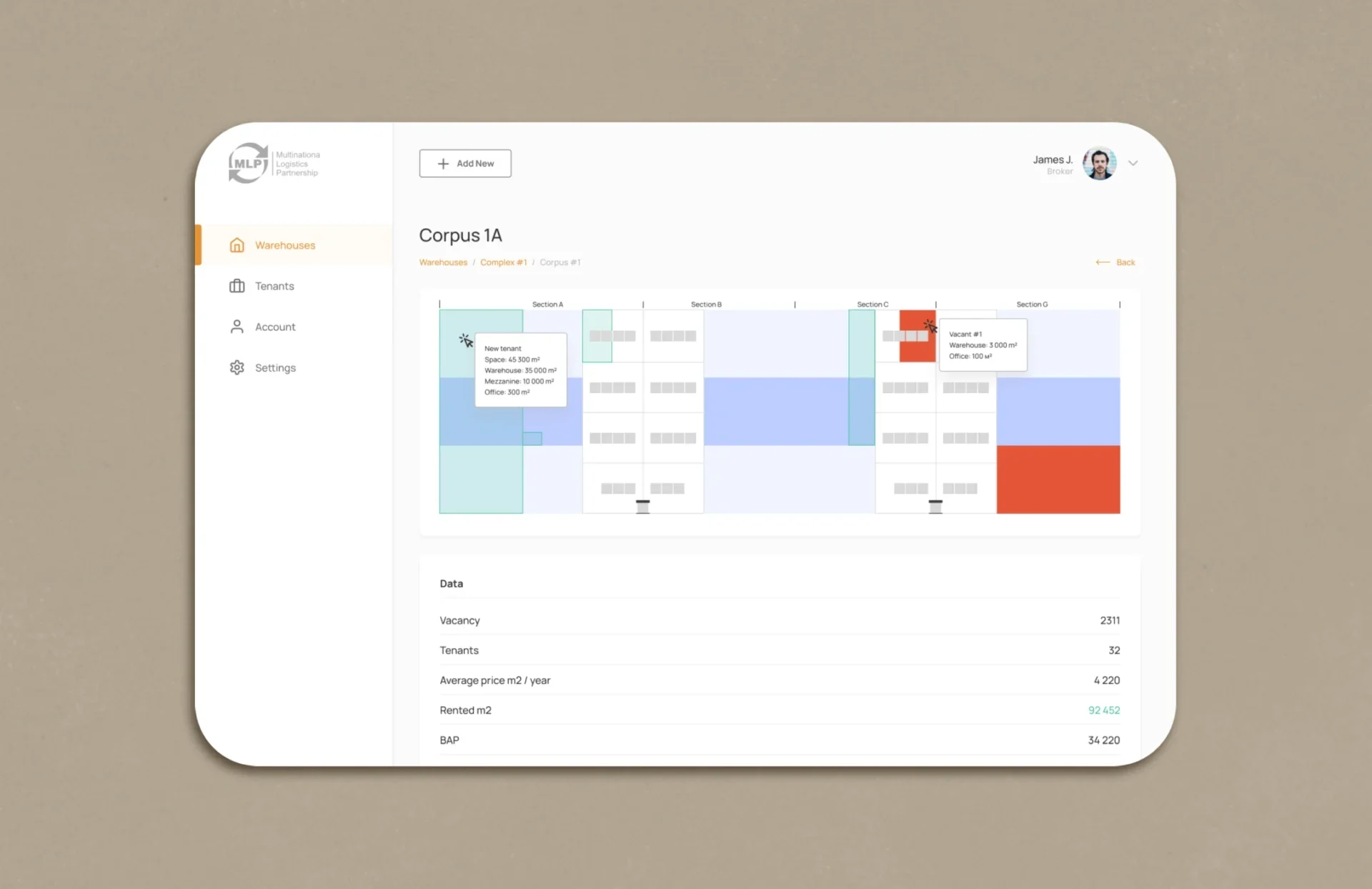
Your team marks a unit as leased once, and the map and the list update. On IC Park the map synced with the CRM and the messengers. For MLP we built a web application that holds every park, unit and tenant, shows occupancy on an interactive building map and keeps the contracts and lease terms in one place (MLP web app case).
Tenants also search LoopNet, Crexi and CoStar, and smaller sites copy those listings and keep them up long after a space is leased. Your own site is the one place you fully control, so it’s where availability stays accurate. We can connect your listings so they publish to the listing platforms automatically from the same data.
Commercial real estate website mistakes we see most
Beautiful renders, no plans or prices
Premium visuals matter, especially for a premium project, but they don’t lease space on their own.
“A client can look at a beautiful picture, but if you don’t show plans and prices there, nobody buys anything.” — Konstantin Tesov, founder of Uwindi
No concept or positioning
The site lists square footage and leaves out why this park, for which businesses, and what makes it a better choice than the one down the road.
The specs live only on the phone
Tenants called to ask the exact location, the rates, the building’s technical parameters, the access roads and the floor plans, because the site didn’t say. When all of it is on the page, the pre-sale happens on the site.
An old rate
Rates move. Some owners keep asking last year’s high rate and sit empty; others lease too cheap when demand rises, get a rush and lose profit. The site needs current numbers, and so does your pricing.
Leasing only through brokers
Broker commissions on a large lease can run to a couple of months’ rent, and a lease commission is usually figured on the whole lease value. Before working with us, IC Park and MLP leased through independent brokers.
Commercial real estate website case studies
About 248,000 sq ft sold in eight months, before construction finished, nearly 3× the client’s own sales plan. A site with a live availability map synced with the CRM, and one landing page with a different offer for each buyer group.
A record 97% occupancy across 21M+ sq ft. A multi-landing system inside the main website for three tenant segments, plus search and display ads aimed at rentals of 21,500 sq ft and up.
One system for every park, unit and tenant. Management reports that took more than a week are instant, and brokers get current availability in two clicks.
Our web design process for property websites
1. Discovery
About a week, $1,200, credited to the site if it starts within 30 days: your market, the competing properties and their rates, and the tenant or buyer segments you want.
2. Structure and mockups
Property pages, the availability map and list, the request form and the broker section. Edits until you approve.
3. Build and content
From your material and an interview with your leasing team. We plan the video and drone shoot. If the project has no name or brand yet, we start with the concept and the brand identity, then the site.
4. Launch
Redirects from the old site, analytics, form tracking and a walkthrough of the admin, so your team can update availability itself.
Prepayment per stage; stop after any stage and keep the work you paid for.
Commercial real estate website design cost
The price is fixed in writing before you pay anything.
A site for one complex
A site of up to five core pages for a single warehouse complex or property.
A portfolio site with a page for each park
Separate landing pages for each property, many pages per park, an interactive availability map.
After launch: get found by tenants and buyers
Tenants and buyers search for space to lease or buy in their area, and AI assistants recommend property sites that answer those questions clearly. A narrow search typed 10–20 times a month often brings a client, because the person already knows what they need. To grow from the site, see real estate marketing for developers, SEO and AI search and paid ads. Before you brief anyone, our commercial real estate website checklist lists what a leasing site should show.
You ask,
we answer
- How long does a commercial real estate website take?
About a week of Discovery, then 3–4 weeks for a site of up to five core pages, or 8–10 weeks for a portfolio site with a page for each property.
- Should each property have its own website?
Usually one site for the company with a full page for each property works better than a single-property site for each building. Each page carries that building’s specs, access and availability, and the company’s track record supports all of them.
- Can our team update available space ourselves?
Yes. Your team changes a unit’s status in the admin or in your CRM, and the map and the list on the site update.
- Can you connect our listings to LoopNet, Crexi or CoStar?
Yes, we can set up automatic publishing from the same data that feeds your site, so a leased unit comes down everywhere. We scope it in Discovery.
- Is a template or a listing builder enough?
For one listing, a page on a listing platform can be enough. A park or a portfolio needs a custom website built around its specs, availability and tenant segments, on your own domain, where the inquiries and the search traffic stay with you.
- Do you design investor presentations and brochures?
Yes, to your brief and in the same style as the site, including a broker brochure your team can send in one click.