Petrukhino Group: one website for a developer of 16 countryside communities
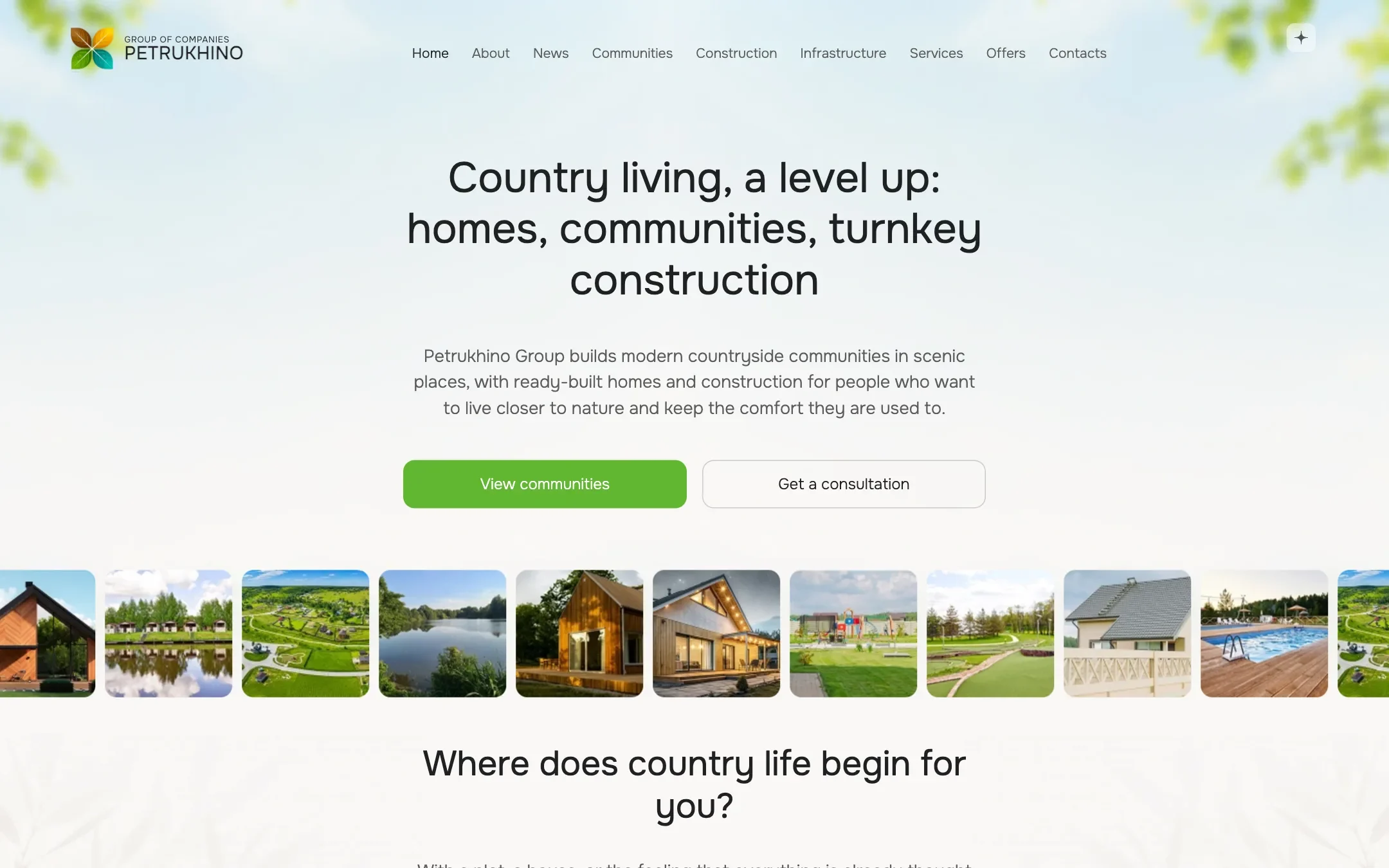
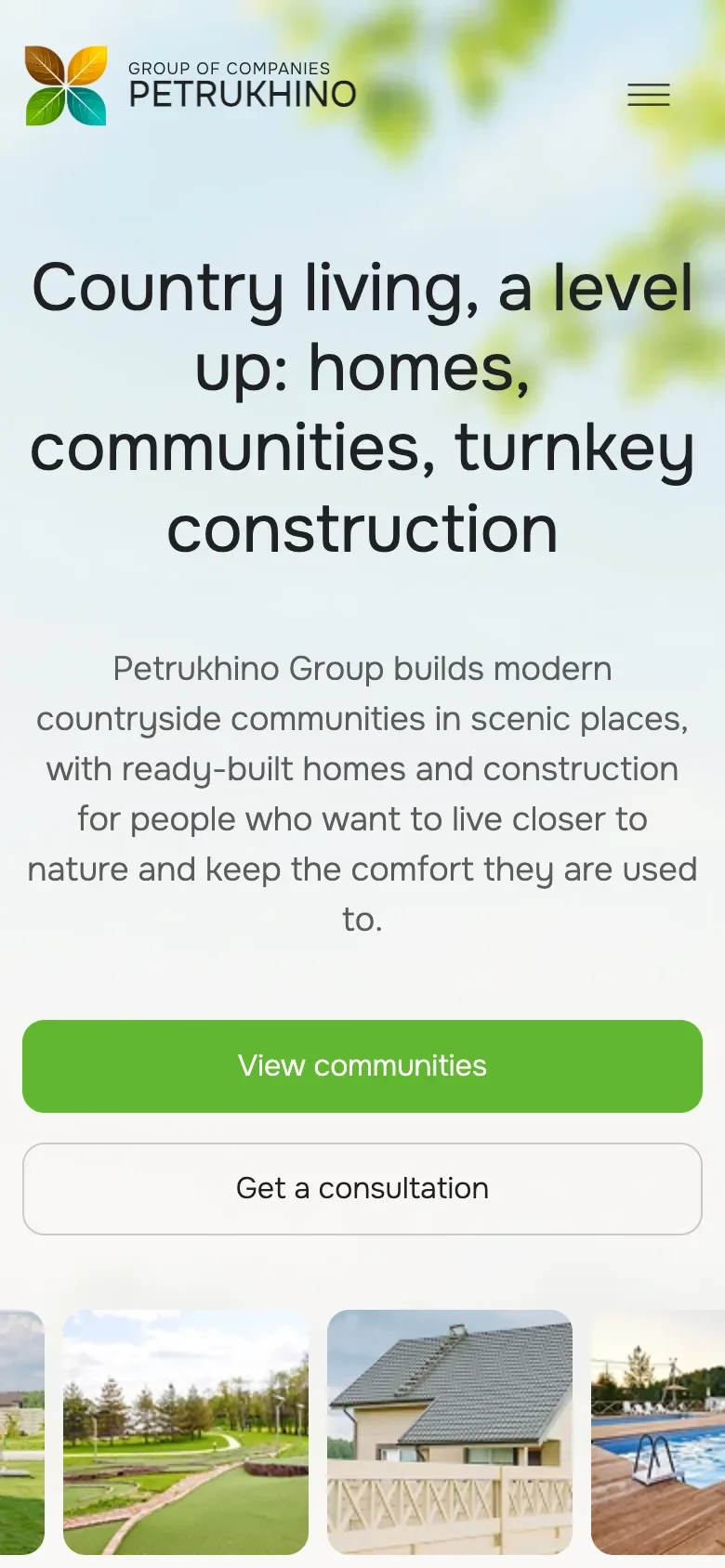
Petrukhino Group develops countryside communities: 16 of them in two directions south and southwest of the city, each with roads, utilities and forest or water nearby. The group builds homes through its construction company, Razvitie, maintains the communities through its own management company and runs a hotel, a restaurant, a horse club and nine ponds for residents. Uwindi had already built websites for several of its communities and for Razvitie. The group’s own website was a list of plots and houses with price filters. It did not show the level of the communities or of the company behind them, gave buyers nothing to feel, and sales suffered for it.
The whole group on the first screens
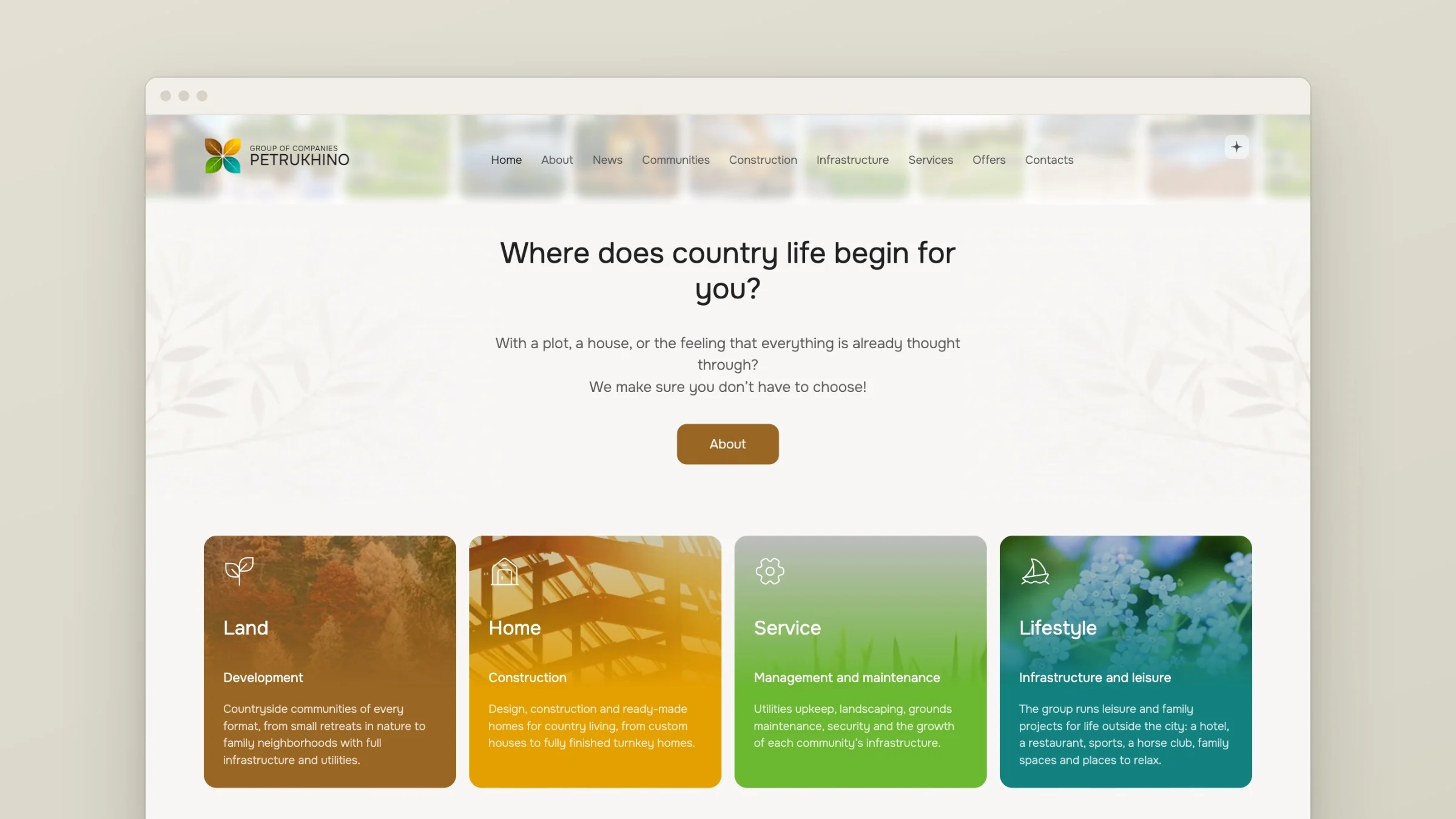
A family moving out of the city chooses more than a plot. They want to know who will build the house, who will clear the roads in winter and what there is to do on a weekend. The home page answers in that order. A headline about country living comes first, then the group’s four lines of business as four cards: Land for development, Home for construction, Service for management and maintenance, Lifestyle for the hotel, the restaurant and leisure. The line above the cards sets the promise: “We make sure you don’t have to choose.”
Communities you can compare at a glance
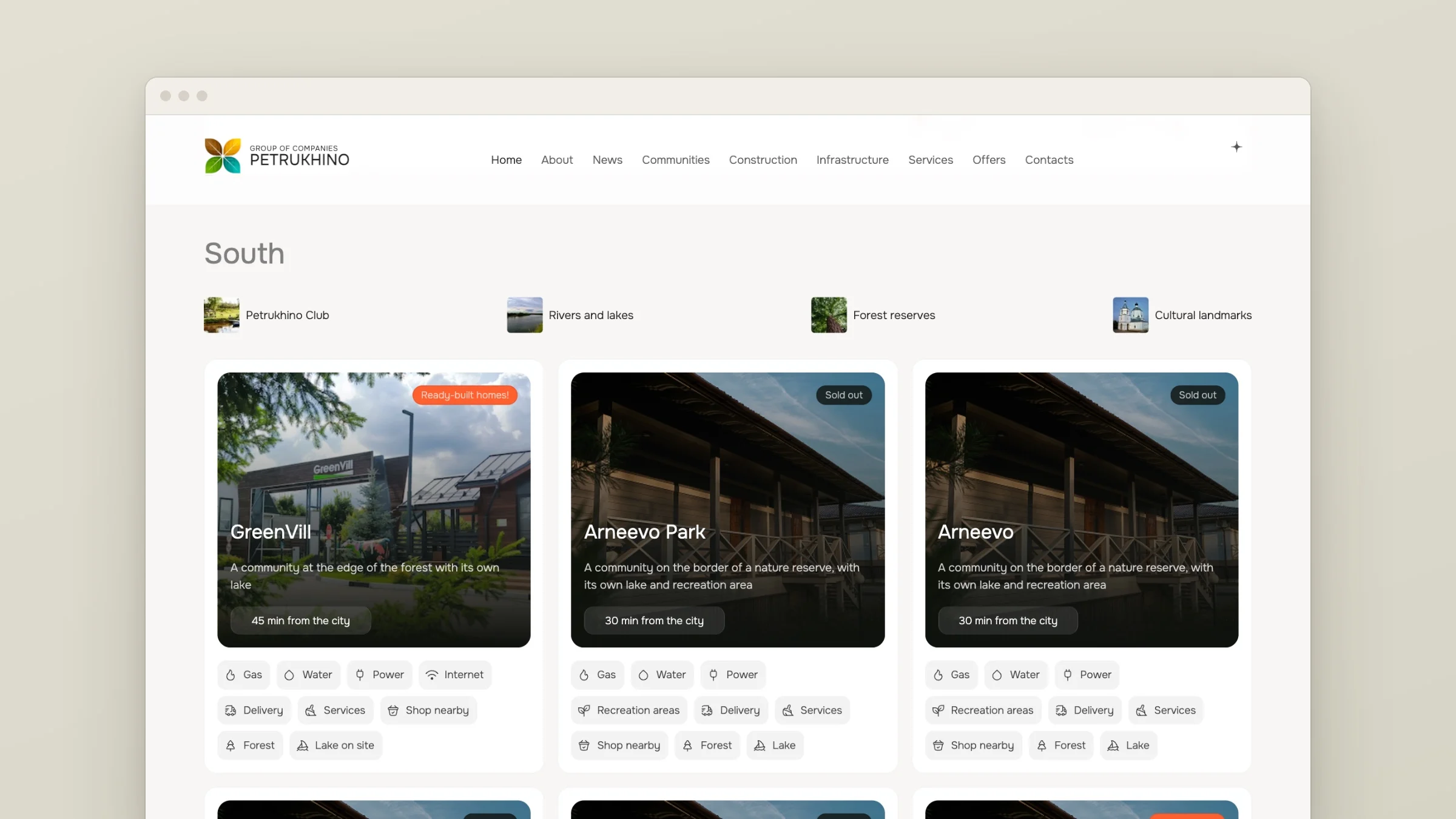
Communities are grouped by direction, and each direction opens with what is around it: rivers and lakes, forest reserves, landmarks. Every community card shows the drive time, the status (now selling, coming soon or sold out), the utilities and the surroundings, such as forest, a lake on site or a shop nearby. Cards of communities with ready-built homes carry a label, and the homes have their own catalog with area, bedrooms, plot size and price.
All 16 communities run on one page template: utilities explained in detail, the plots and grounds, and a form to book a site visit. A new community is a new entry in the CMS.
Construction and resident services inside the group site
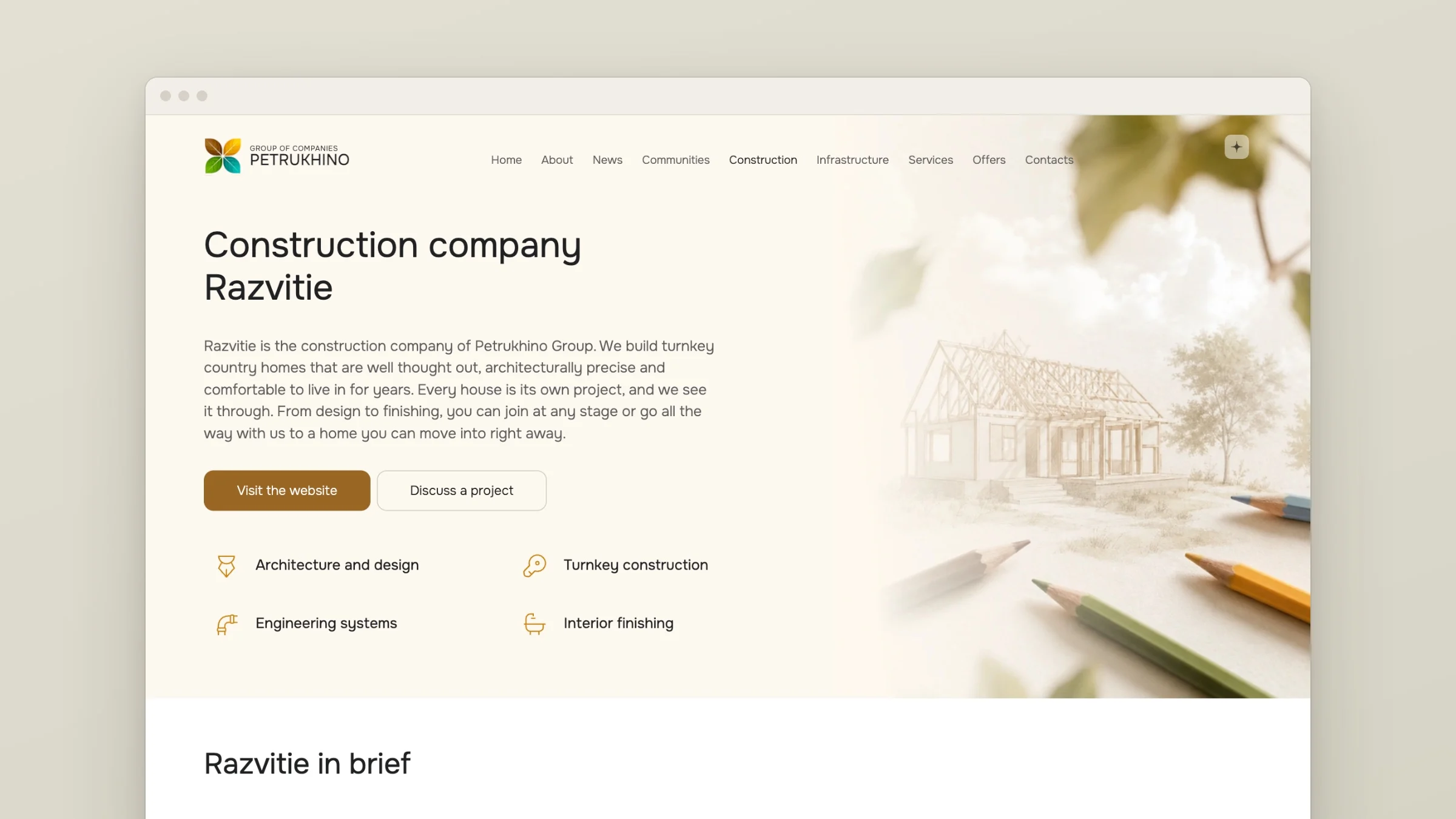
Razvitie, the construction company, and Life Service, the management company, keep their own websites. On the group site each gets a page in the same visual language: a short version of its story, its services and a link to the full site. A buyer sees the developer, the builder and the team that maintains the communities as one group.
Buying explained before the first call
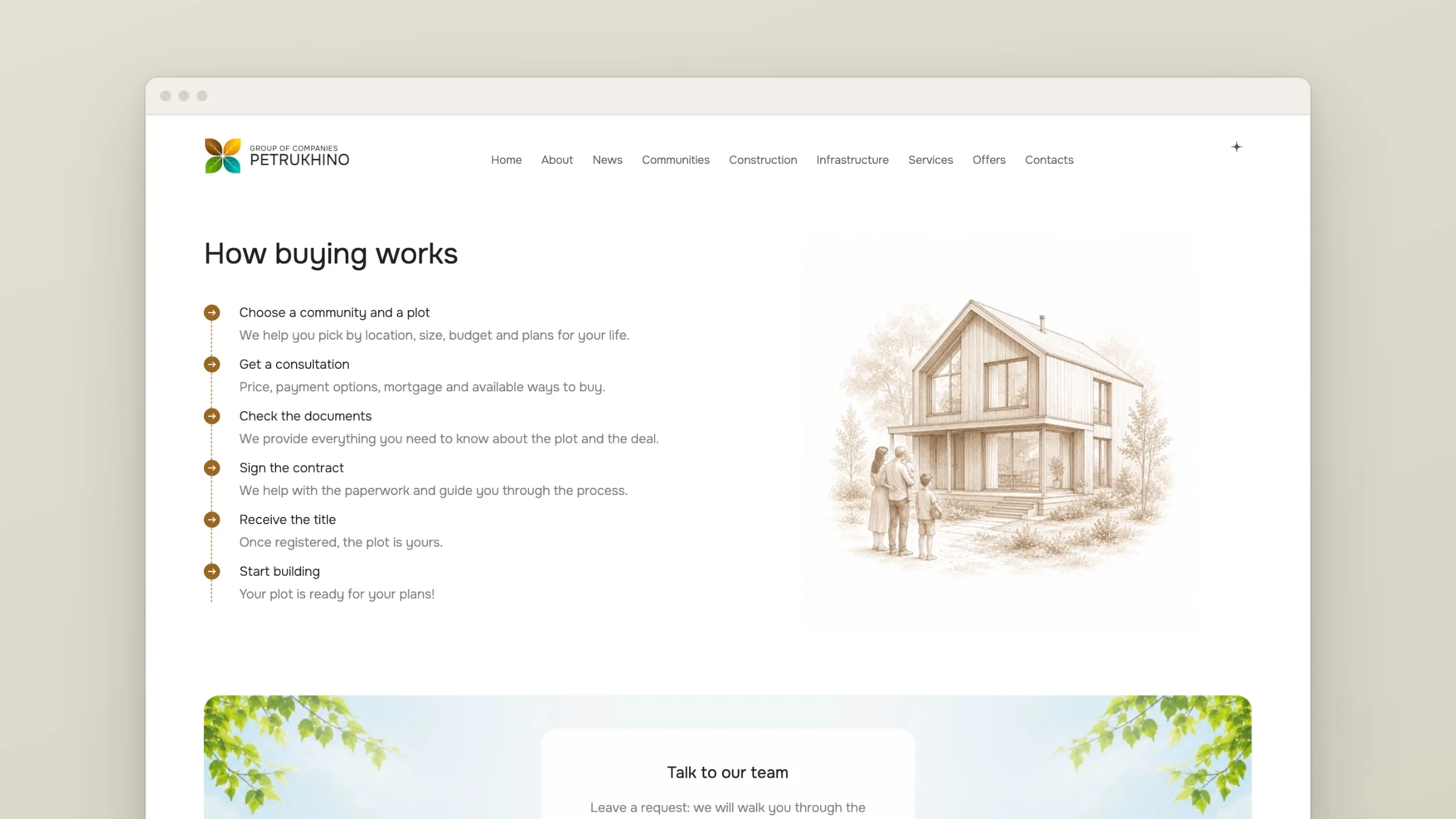
Plots are sold directly by the owner. The “How to buy” page spells out what that means for the buyer: no agents, help with the mortgage, support after the deal, and the six steps of a purchase up to the title in the buyer’s name.
A site the sales team runs itself
The site runs on a CMS with editable templates. The sales team changes prices and home statuses on its own and adds news and offers without a developer. Every form on the site goes straight to the group’s CRM.
What Petrukhino Group got
- One website for the whole group: 16 communities, ready-built homes, construction and resident services.
- One template for every community, so adding a community takes a CMS entry.
- A design system with templates for news, partners, offers and leisure projects.
- Prices and home statuses the sales team updates itself.
- Requests from every form in the group’s CRM.
More case studies
All case studies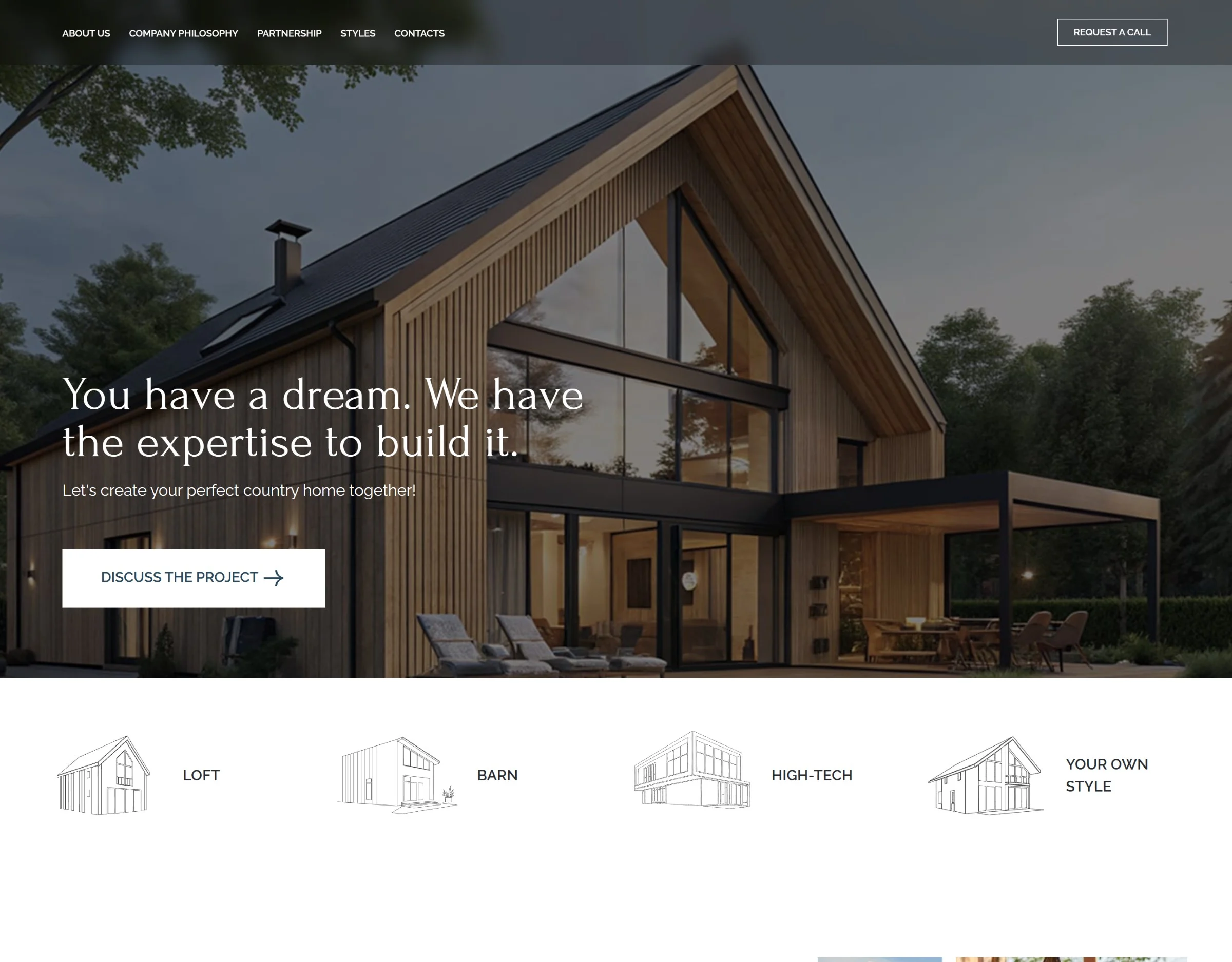
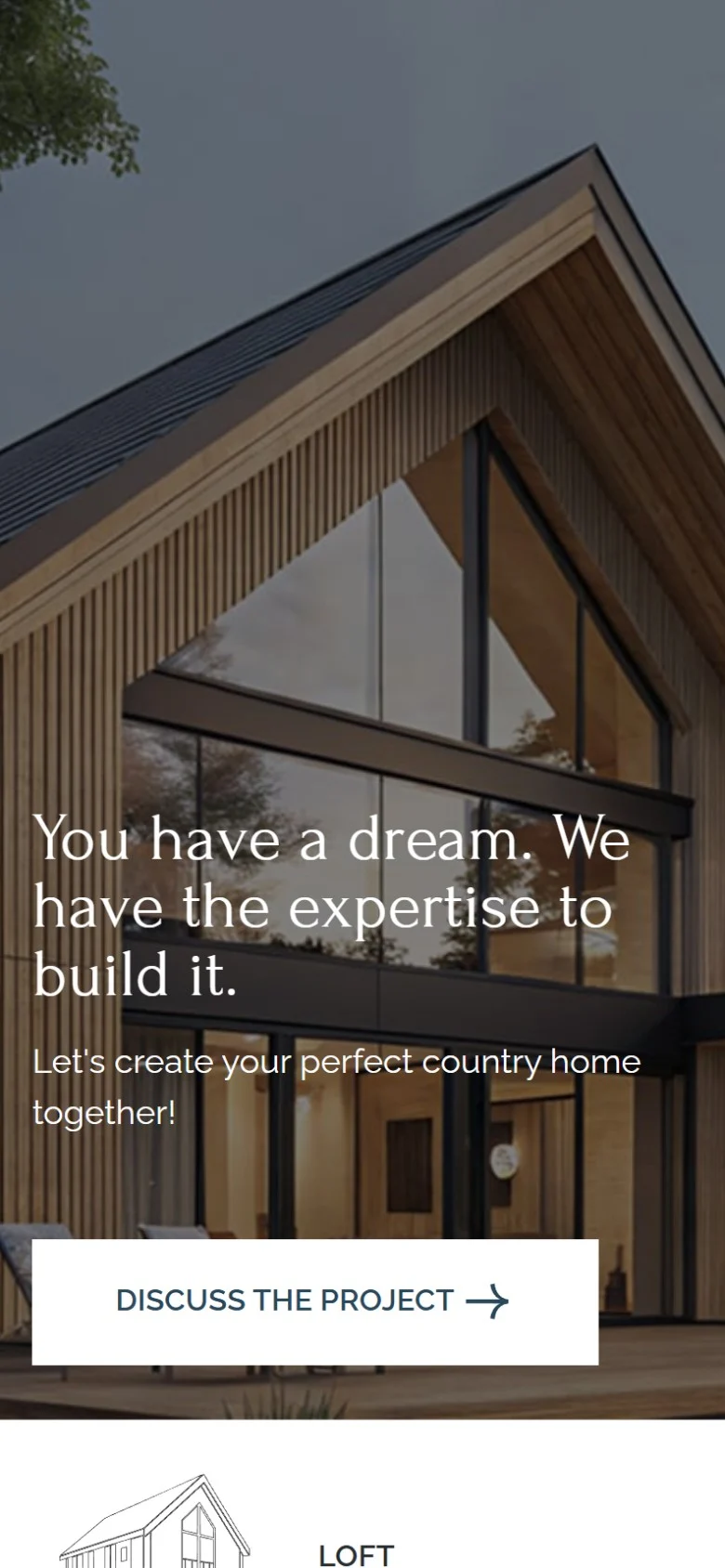
Sixteen years of premium custom homes and a site that did not match: an architecture-first website that moves the right buyer from browsing to a conversation, with lead forms routed to the CRM.
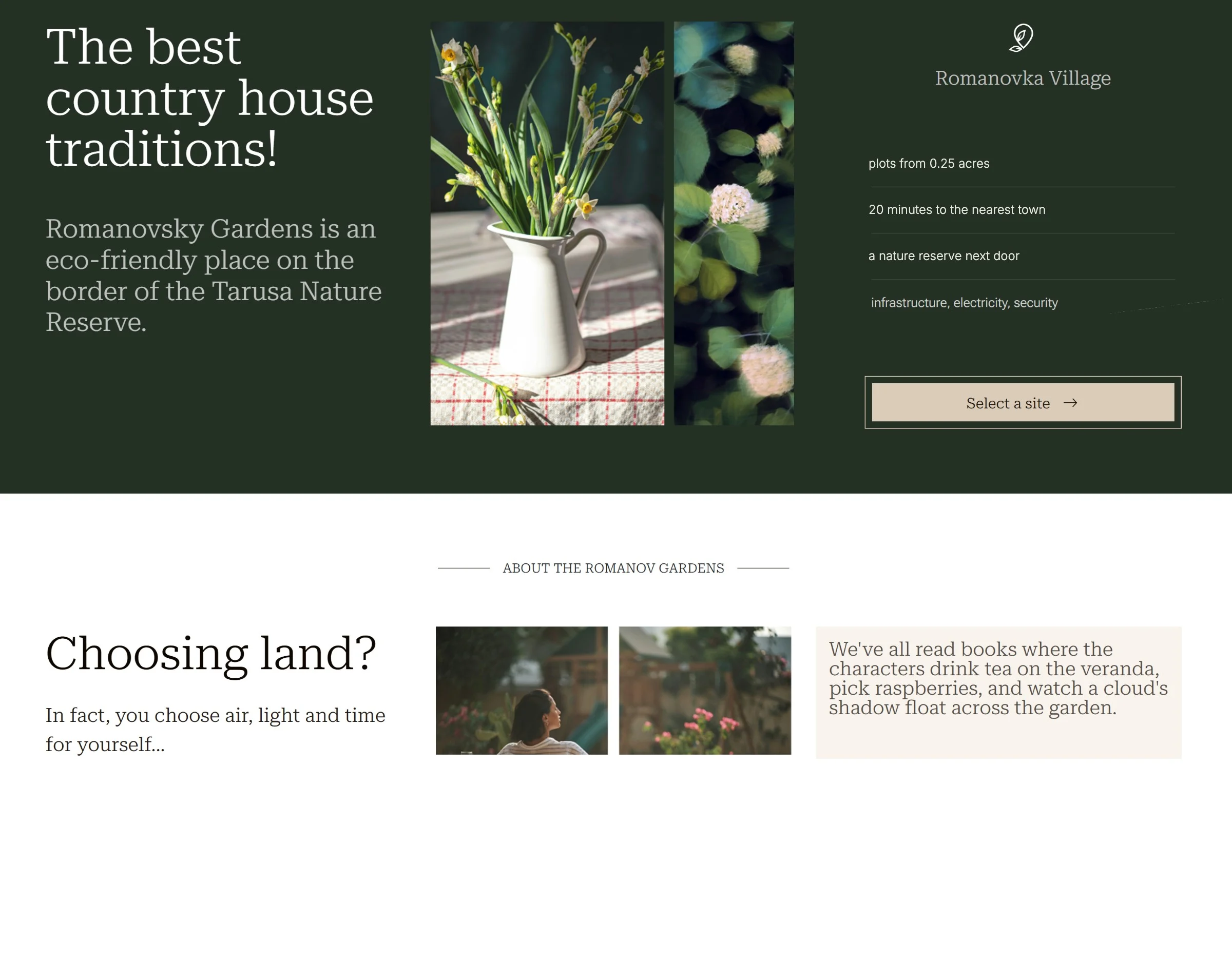
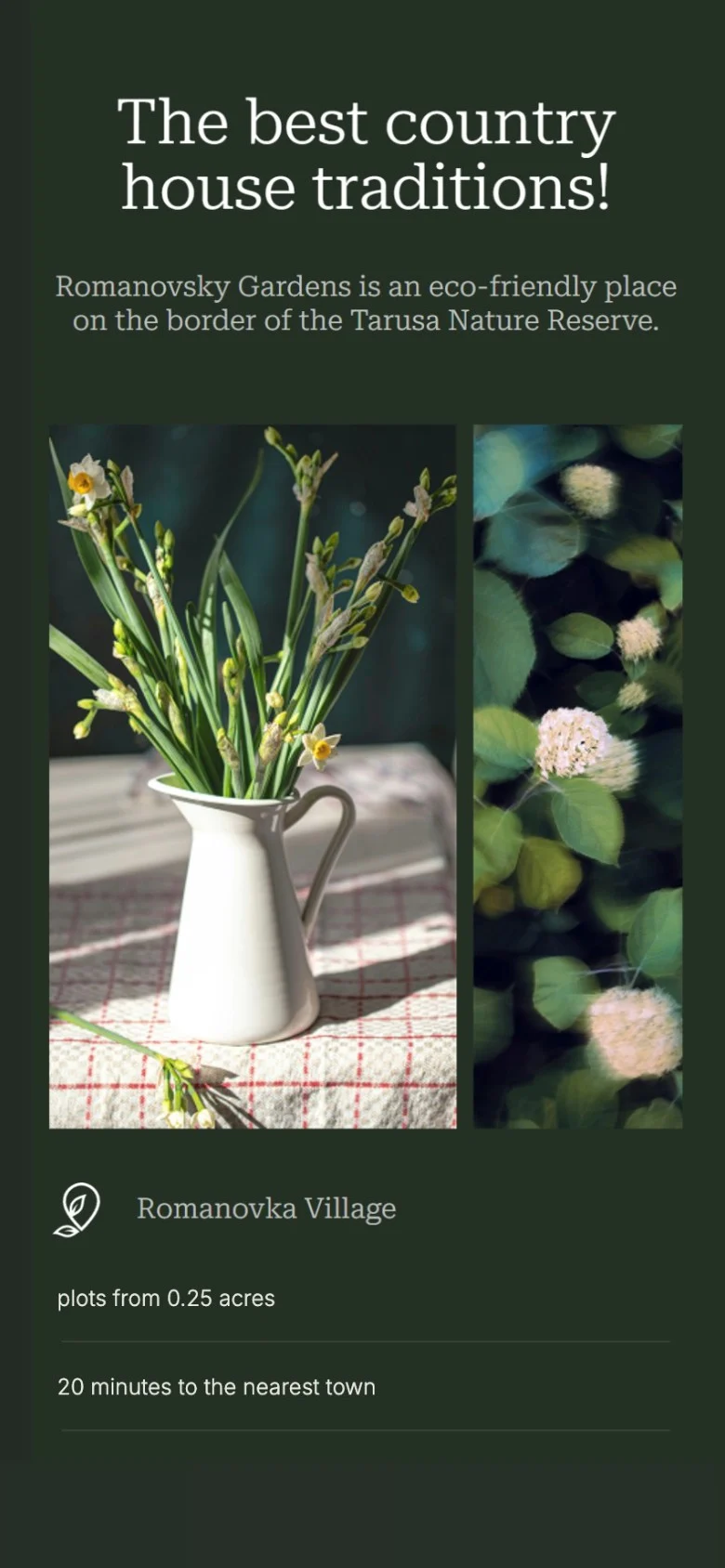
A landing page for a luxury community by the same group: lifestyle-first design and cultural positioning, so buyers arrive for site visits already decided.
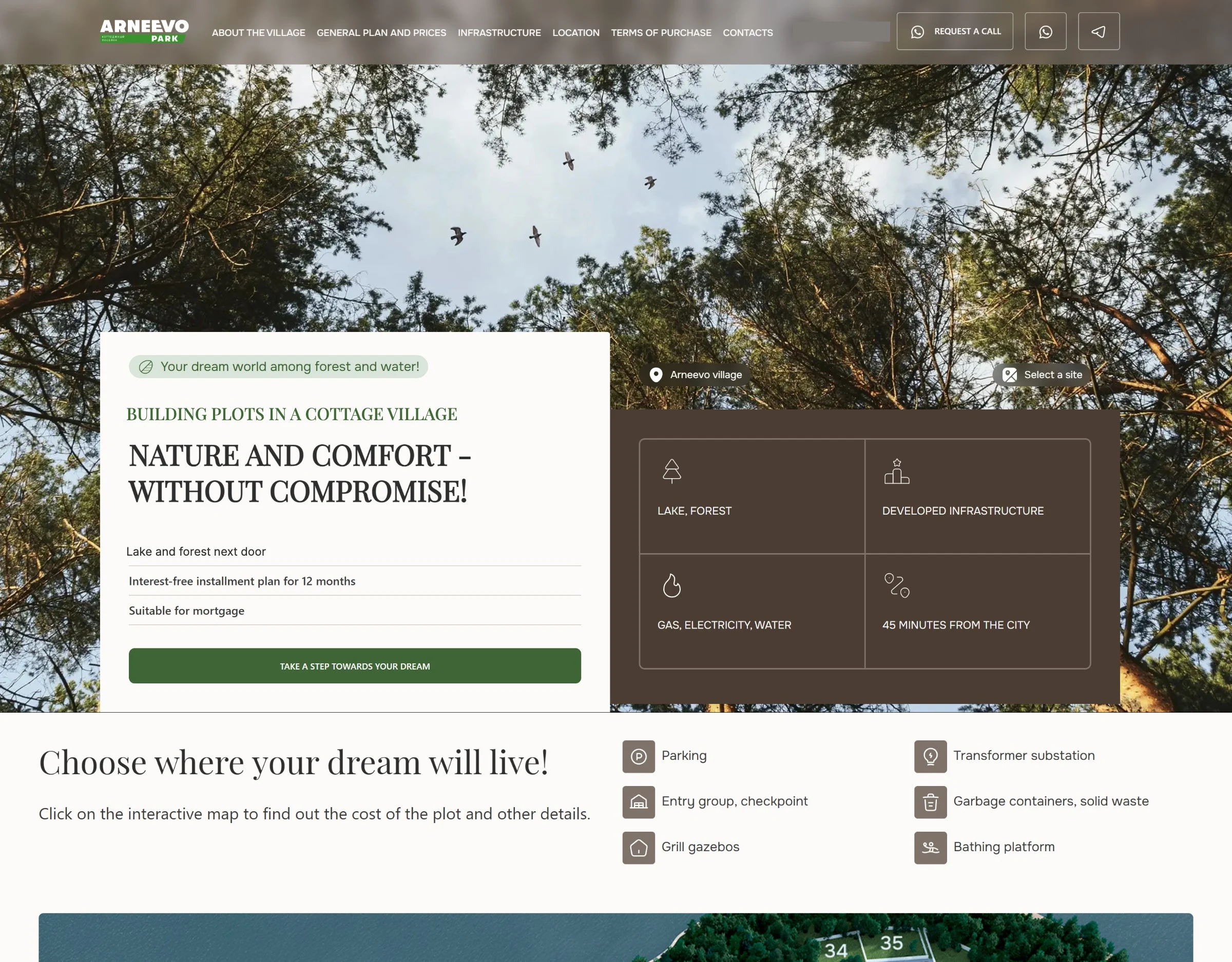
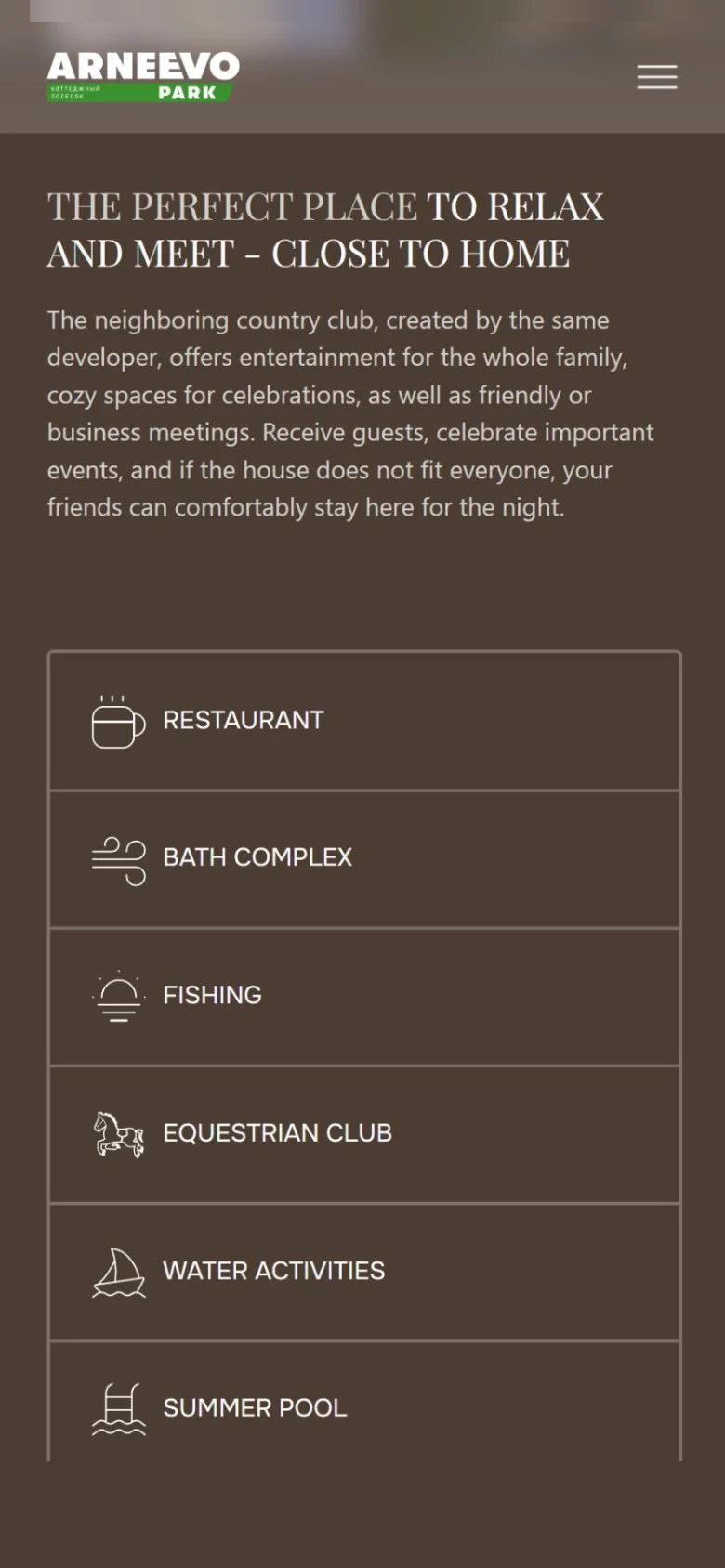
A landing page that sells lifestyle, not specs: lifestyle-first design, CRM, an interactive site map; the average deal value rose from launch.