
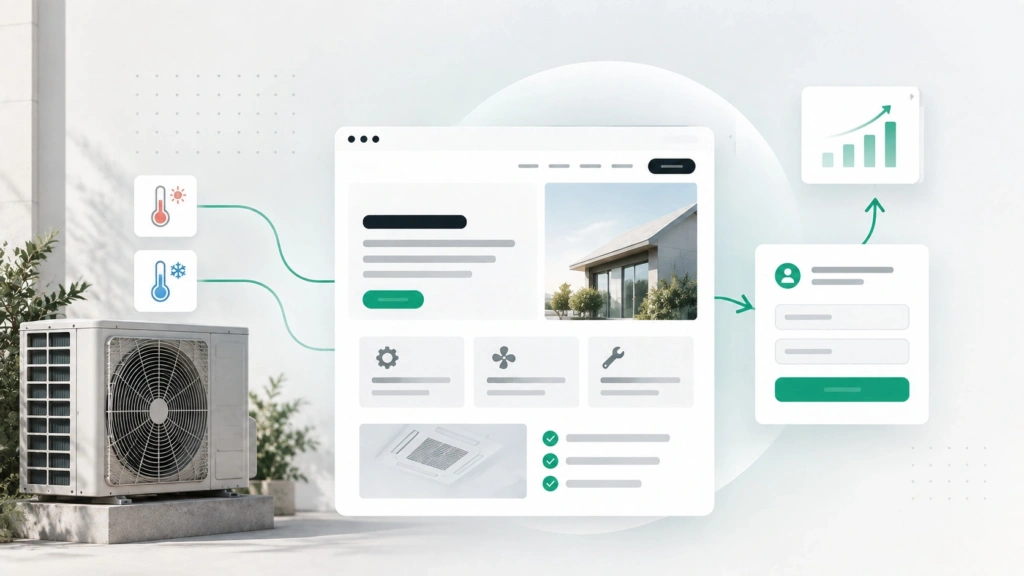

Most HVAC landing pages lose paid clicks for the same few reasons. Here are the 10 practices we use, with headline and button examples you can copy.
Our agency has been on the market since 2015, and I’ve seen many businesses lose customers and leads because of lousy web pages. That’s why I’m sharing top tips for making an HVAC landing page that gets people to buy.
For heating, ventilation, and air conditioning (HVAC) companies running pay-per-click (PPC) ads, the landing page decides what each lead costs. When the page repeats what the ad promised and makes it easy to schedule a service or appointment, fewer paid clicks go to waste.
Your landing page is often the first thing people see of your business, especially if you use online advertisement. It’s like a virtual handshake or a digital store. A good landing page can make all the difference in converting leads.
With the right design, your page can look professional and boost sales. It’s all about creating a page that works well and looks great. Using a page builder can help you create a landing page, but we recommend a custom website development service to have a tailored one.
Did you know photos and videos on landing pages can make people more likely to engage? Also, most customers read reviews before buying, so visuals and reviews both deserve space on the page.
Following best practices, you can make a page that meets your customers’ needs. This makes them more likely to choose your HVAC services if you use a marketing campaign.
Key Takeaways
- Effective landing pages balance design, copywriting, and optimization
- Compelling headlines and clear benefits are crucial for engagement on landing pages that convert
- Testimonials build trust with potential customers
- Clear calls-to-action guide visitors toward conversion
- Visual content significantly increases user engagement
- Consistency between ads and landing pages boosts trust and conversions
- Mobile optimization is essential for reaching all potential customers
Short on time? We build landing pages for small HVAC companies, with call tracking and ads that match the page. See our Google Ads management.
A good page needs more than a clean design; it demands a clear focus on turning potential customers into paying ones. Many companies struggle to bridge the gap between what an ad promises and their landing page delivers, leading to missed opportunities. A successful HVAC landing page focuses on a specific need: “AC not cooling? Get it fixed today!” or “Save with our seasonal maintenance package.” By addressing the problem you solve right away and including a compelling offer or promotion, you can immediately entice visitors to take action.
HVAC landing page template: the section order we use
This is the section order we use for an HVAC service page. Customize the words for each service, and keep the order.
- A headline that repeats the ad: “AC not cooling? Book a repair in [City] today.”
- One line underneath, a click-to-call number, and one button like “Schedule service.”
- A trust strip: Google rating, license number, and NATE or EPA 608 certified technicians.
- One offer, with its terms in plain words.
- What happens next, in three steps.
- Reviews with first names and neighborhoods.
- Frequently asked questions about price, service area, and warranty.
- The same button again.
Leave out the main menu, the sidebar, and blog links. Every exit you remove leaves visitors one path: call you or book a service.
Creating a Compelling Headline That Converts
The headline does most of the work. It goes at the top of the page. Knowing headline psychology helps you grab attention, boost conversions, and get visitors to contact your business and schedule a service. Potential customers want value, and we have to put it on the table first.
Understanding Headline Psychology
Good headlines touch on emotions and needs. They talk about comfort, saving energy, or better air quality. Using persuasive language in headlines can get people engaged. Try for short, clear headlines that show the main benefit of your services.
Components of High-Converting Headlines
To make great headlines, think about these essential parts:
- Keep it brief: one line on a phone screen
- Use numbers or statistics to add credibility
- Incorporate power words that evoke emotion
- Highlight your unique value proposition
Examples of Effective HVAC Headlines
Example headlines (use only numbers you can back up):
| Headline | Psychology Used |
|---|---|
| “Cut Your Energy Bills by 30% with Our HVAC Tune-Up” | Specific benefit uses numbers |
| “24/7 Emergency AC Repair: Cool Comfort in 60 Minutes” | Urgency, quick solution |
| “Breathe Easier: Professional Air Quality Solutions” | Emotional appeal, health focus |
Creating compelling headlines is all about knowing and meeting your audience’s needs on your website. Use persuasive language that speaks to your customers for the best results in your landing page design.
Designing the Perfect HVAC Landing Page
A good page is easy to use on any device. A well-made landing page can help your business grow. Let’s look at what makes a landing page shine.
Keep it simple. Keep the page clean and easy to read. This makes it simple for visitors to find what they need, like headlines and calls to action. A simple design also makes your page work better and feel more welcoming.
Speed is critical too. Make sure your page loads quickly to keep visitors interested. Fast pages are suitable for both users and search engines.
Responsive design is a must today. The page has to work on a phone first. This is key since most people use mobiles to browse the web.
- Clear and concise messaging
- Prominent call-to-action buttons
- Easy-to-read fonts and color schemes
- High-quality images of HVAC systems or technicians
By following these tips, you can make a landing page that’s easy to use and effective. A well-designed landing page is like your digital storefront. It makes a great first impression on potential customers.
Crafting Clear and Actionable CTAs
Creating effective calls to action (CTAs) is key to boosting conversions on your page. A clear button can turn casual visitors into potential customers. This can significantly impact your business’s success. Don’t forget to explain what happens next after your offer and combine it with a call to action. Don’t make visitors take extra steps to find important information.
Strategic Button Placement
Placing your buttons in the right spots is crucial. Put them above the fold for everyone to see right away. Include easy contact options like forms or “call now” buttons. This way, you can catch leads at different points in their decision-making process.
Button Design Best Practices
Good button design grabs attention and drives action. Use contrasting colors, bold fonts, and plenty of white space to make them pop. Consider these design elements:
- Button shape and size
- Color psychology
- Clear and concise text
- Visual hierarchy
Converting Language for HVAC Services
Use action-oriented language specific to HVAC services on your buttons. This helps potential customers know what to expect when they click and don’t make them feel like something is wrong or unclear. Here are some practical examples:
| Button Text | Purpose |
|---|---|
| “Schedule Online Now!” | Immediate service booking |
| “Book an Inspection Appointment” | Preventive maintenance |
| “Get a Free Quote on Your New HVAC System” | System replacement inquiry |
Remember, your button design and converting language should match your services and target audience needs. Test different versions to see what works best with your customers. This will help drive the most conversions. You can also A-B test it on your landing page template.
Building Trust Through Social Proof
It is key for HVAC businesses to gain trust and credibility. Customer testimonials and reviews show positive experiences and answer concerns. Most people check reviews before they call.

To get great reviews, you must offer top-notch service, reliable service, transparent pricing, and good support. Using customer experience software helps manage interactions, service history, and communication.
Practical strategies include:
- Collecting reviews through Google My Business, Yelp, and Facebook
- Displaying client logos on the company website
- Showcasing online awards and digital badges
- Encouraging referrals from satisfied customers
Combining reviews with industry certifications makes a strong trust-building strategy. This shows both service quality and expertise, making businesses stand out.
| Element | Impact on Trust Building |
|---|---|
| Customer Reviews | Answer ‘are they any good?’ before the call |
| Testimonials with Photos | Enhances authenticity and credibility |
| Industry Certifications | Validates skills and professionalism |
| Referral Marketing | Drives sales through trust and friendship |
Showcasing Professional Credentials and Certifications
Building trust with potential clients is key in the HVAC industry. Showing your professional credentials and certifications on your landing page is a great way to do this. This section will show you how to use industry accreditations, awards, and partnerships to increase your credibility and stand out.
Industry Accreditations That Matter
HVAC certifications and industry accreditations are crucial. They show your expertise. Show your team’s qualifications, like NATE or EPA 608 certification. These credentials prove your technicians can handle different HVAC systems well.
Displaying Awards and Recognition
Show off any awards or recognition your company has gotten. This could be local business awards, customer satisfaction accolades, or industry-specific honors. For example, if you’ve been named the “Best HVAC Contractor” in your area, put it on the page.
Partnership Badges and Affiliations
Show your affiliations with reputable organizations and manufacturers. Include partnership badges from well-known HVAC brands or membership logos from professional associations. These visual elements on your website show your company’s commitment to quality and ongoing professional development.
- Chamber of Commerce membership
- Better Business Bureau (BBB) accreditation
- Manufacturer certifications (e.g., Carrier, Trane, Lennox)
- ACCA (Air Conditioning Contractors of America) membership
You build trust and differentiate your business by showing these credentials, awards, and affiliations. Remember to keep these elements up-to-date and relevant to your target audience for maximum impact.
Visual Content Strategy for HVAC Services

A strong visual content strategy is key for HVAC businesses. This makes high-quality photos and videos essential for your marketing.
Company photos help make your brand more relatable. Show off your team, finished projects, and happy customers. These images build trust and create emotional connections.
Videos are also a must-have. Use them to show your services, share customer feedback, or offer helpful tips. This shows your work quality and builds trust with clients.
Your visual content should match your brand’s personality. Use consistent colors, photo styles, and video tones. This creates a unified brand image that connects with your audience.
- Use real images of completed projects
- Include photos of your team to build trust
- Create informative videos about HVAC services
- Ensure all visual content aligns with your brand personality
Visual content is more than just looks. It proves your work quality and customer happiness. A solid visual strategy can make your business stand out and leave a lasting impression.
Based on our practice, we can definitely say that the most effective way to increase conversion rates is to use professional photography or videography. Include photos of these satisfied customers, your team in action, and the people behind the scenes to build trust.
These company photos and videos don’t just make your page visually appealing; they also ensure that your customers feel a connection with your brand. Paired with 5-star reviews, your page will feel like something amazing awaits them when they schedule service or purchase.
Message Consistency Between Ads and Landing Pages
Messaging consistency is the cheapest fix on this list. If the ad promises one thing and the page talks about another, people hit the back button. When potential customers arrive, the headline, the offer, and the photos should match the ad they just clicked.
Maintaining Brand Voice
Your brand voice should be the same everywhere. Use the same tone, style, and language in ads and landing pages. This makes customers recognize and connect with your brand, improving their experience.
Aligning Offers and Promises
Ensure your landing page meets the promises in your ads. If you offer a discount, show it clearly on the landing page. This avoids confusion and boosts conversion rates.
Keep the path short
Use the same wording in the ad, the headline, and the button. Keep the form to name, phone, and the problem. On a phone, few people have patience for filling out forms with ten fields.
Remember, targeted landing pages are crucial for success. They turn clicks into leads and drive relevant traffic to your site. Without them, you might lose potential clients to competitors and see higher bounce rates.
Highlighting Unique Value Propositions
A strong, unique value proposition makes your business stand out. Focusing on specific benefits can draw in more customers and increase sales.
Many homeowners look for ways to save money. Show how your services can lead to significant savings over time. For instance, point out the energy savings from high-efficiency HVAC systems or smart thermostats.
Customer comfort is key. Talk about features like zoning systems for personalized temperature control. Also, mention advanced filtration systems that improve air quality, which is great for families with allergies.
Examples of value propositions (list only what you actually offer):
- 24/7 emergency service
- 90-minute precision arrival
- 30-year warranty on parts and labor
- Free annual maintenance for the first year
Make your unique value proposition based on what customers say and ask. This way, you meet their most important needs.
| Value Proposition | Customer Benefit |
|---|---|
| 20+ years of HVAC mastery | Expert service from experienced technicians |
| Energy-efficient installations | Lower utility bills and reduced carbon footprint |
| Customized comfort solutions | Personalized home environment |
| Transparent pricing | No surprises on your bill |
By clearly sharing these unique aspects of your services, you give customers a strong reason to choose you over others.
The Three-Step Process Implementation
A clear customer journey is key to a successful HVAC service process. By outlining the steps on your landing page, you build trust. This guides potential clients through their appointment experience. Let’s explore a simple three-step approach that streamlines the service process and enhances customer satisfaction.
Contact and Communication
The first step involves initial contact. Customers reach out to discuss their needs. This can be through phone, email, or a form on the page. Make this process easy and inviting to encourage potential clients to take action.
Scheduling and Confirmation
Once contact is established, the focus shifts to scheduling. Your professional team works with the customer to schedule a convenient HVAC appointment. Prompt confirmation via email or text reassures the client and sets expectations for the upcoming service.
Service Delivery and Follow-up
The final step is the actual service delivery. Your expert team arrives on time, performs the necessary work, and ensures customer satisfaction. After the service completes the customer journey, a follow-up call or email opens the door for future business.
| Step | Action | Customer Benefit |
|---|---|---|
| 1. Contact | Customer reaches out | Easy communication |
| 2. Scheduling | Appointment set | Convenience |
| 3. Service & Follow-up | Work completed and feedback gathered | Problem solved, and voice heard |
Implementing this three-step process creates a smooth transition from visitor to satisfied customer. This transparent approach builds trust and ensures that customers are well-informed throughout their service experience.
Mobile Optimization for HVAC Landing Pages
Making your pages mobile-friendly is key. Many homeowners search for AC repair on a phone. So, having a responsive design is not just lovely; it’s necessary. A mobile-friendly page ensures everyone has a great experience, regardless of screen size.
To make a top-notch mobile-optimized page, focus on these crucial parts:
- Fast loading times to prevent user frustration
- Large, easily tappable buttons for calls to action
- Simplified forms with minimal text input
- Consistent design across various devices
Using these mobile optimization tips can help your landing page do better. A well-optimized page makes users happy and gives you more conversions and better rankings on search engines.
Remember, making your page mobile-friendly is an ongoing task. Always check your page on different devices and screen sizes to keep it user-friendly. By focusing on mobile optimization, you’ll stay ahead and meet the needs of your tech-savvy customers.


What to fix first
If you only fix three things, fix these. Make the headline repeat the ad. Put one clear call to action (CTA) above the fold, with a click-to-call number next to it. Tell people what to expect after they contact you. Then add reviews, credentials, and real photos of your team.
Measure booked service calls, not visits. Change one element at a time, and keep the version that brings more calls. That is how a page turns more visitors into paying customers.
Frequently asked questions
What’s the difference between an HVAC landing page and a website?
Your website covers every service, your service area, and your story. An HVAC landing page covers one service and asks for one action: call or book. It has no main menu, so people who come from a Google or Meta ad don’t wander off. Most HVAC and plumbing companies need both: the website for search and referrals, and one landing page per ad campaign.
Should HVAC ads send people to the homepage?
No. A homepage makes people hunt for the service the ad promised, and many leave instead. Send each ad group to a page about that exact service, with the same offer and wording as the ad.
Can I use a template or a page builder?
Yes, for a first test. A page builder lets you start from a template and publish without a developer. Templates start to fall short when you need call tracking, forms that go to your CRM, one page per service, and fast load times on phones. That is the point where a web designer working on your own website makes sense.
How much does an HVAC landing page cost?
It depends on who builds it and how many services you advertise. If we built your website, an extra campaign landing page starts at $750. Google Ads management starts at $1,000 a month, and ad spend is paid directly to Google. For prices by page type and builder, see our guide to landing page cost.
HVAC Landing Pages and Google Ads, Built and Run by Uwindi
We build conversion-focused landing pages for HVAC companies and run the Google Ads that send traffic to them: one page per service (emergency AC repair, system replacement, maintenance plans), ad copy that matches the page, a short qualifying form, click-to-call and call tracking, so you see which campaigns bring booked jobs. Ads management starts at $1,000/month, with ad spend paid directly to Google; on a site we built, an extra campaign landing page starts at $750.
Book a free call and we’ll look at your current page and campaigns and tell you what to fix first. More about our Google Ads management.
Building a full HVAC website? See how we build websites for construction and trade companies, HVAC included.
