
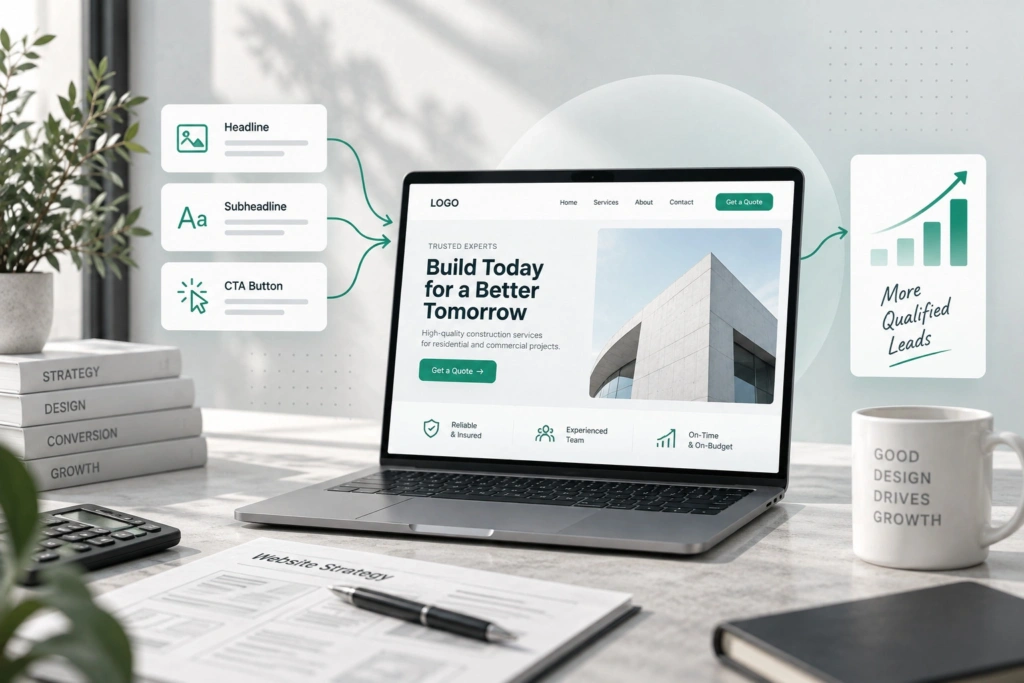

Today we are focusing on a topic that is crucial for increasing your online sales. At our agency, we specialize in designing websites to boost sales. Others often ask me how they can increase their inbound inquiries and phone calls to the sales team and how they can boost the conversion rates of their landing pages.
Today I have the answer for you, and it’s like a real goldmine — a template that will boost your sales with the essential components of the 1st step. This template is especially handy if you don’t know where to start.
Sure, the structure of the first section of your landing page may vary depending on the nature of your business. However, by following this simple method and strategically placing all the components, you can drastically increase your conversion rate and ultimately get more leads.
Here is the video on this topic:
Over the last ten years, we have worked with B2B companies, run countless PPC campaigns for them and created over a hundred landing pages. And I have to tell you, understanding visitor behavior is key. Did you know that a whopping 90% of visitors who come to your landing page via ads will leave without scrolling down if they do not immediately find the solutions they are looking for?
It’s crystal clear: the first section of your landing page is the be-all and end-all when it comes to conversion power. Our experience and the data from the heatmaps show that activity decreases significantly below this crucial first section, even if you might not believe it.

Let’s be honest: people are lazy. If they don’t find what they’re looking for within seconds, they’re gone. And why is that? It’s a game of evolution. Our brains are hard-wired to save energy. So when it’s not necessary to think too much, we opt out to save our mental juice.
That’s why we need to take the opportunity in this first section to place the important aspects of your product or service that will influence the customer’s decision.
When someone clicks on your ad, they have a dozen other tabs open with offers from your competitors. Remember, increasing your landing page conversion rate by just 1% can double your leads without increasing your budget.
Let’s look at this step by step.
How to create landing page header
Start with your logo, a brief description of your business and location details to give potential customers a quick overview. You can also include a menu with anchor links to other sections on your landing page. If you’re planning a sticky header, include a phone number and a contact button that can be used to access a form.

Logo: Your logo is the visual character of your brand. It ensures that people trust your company and recognize it immediately.
A short but powerful statement about what your business does is a great way to help people quickly understand what you’re about. Drawing attention to your unique selling points or key differentiators will help you stand out from others in the same industry.
Location information: Giving your customers information about your location, such as your actual address or the areas you operate in, can make them feel more comfortable knowing that you are local and can be reached. This is especially important for businesses that have a retail store or want to reach people in specific locations.
Menu with anchor links: Adding a menu with anchor links makes browsing easier so users can quickly look around the different sections of the homepage without getting lost. Organize the menu in a way that makes sense and prioritize the parts that are most relevant to your target audience’s desires and hobbies.
Contact information and a button: If you opt for a sticky header, include a button and clear contact information such as a phone number and email address. This makes it easy for people to get in touch with you or do what they want to do, such as ask questions, arrange a meeting or buy something.
By including these things in the title area, you can effectively explain your brand personality, main offering and user experience, while making it easy for visitors to find their way around and get them to interact with your website.
USP: The most important part of the website hero section
This is the crown jewel. Clearly articulate what you offer, who you offer it for and how it solves the customer’s problems. If your price is a selling point, don’t hesitate to mention it here. The job of the headline is to communicate the most important value directly to the potential customer.
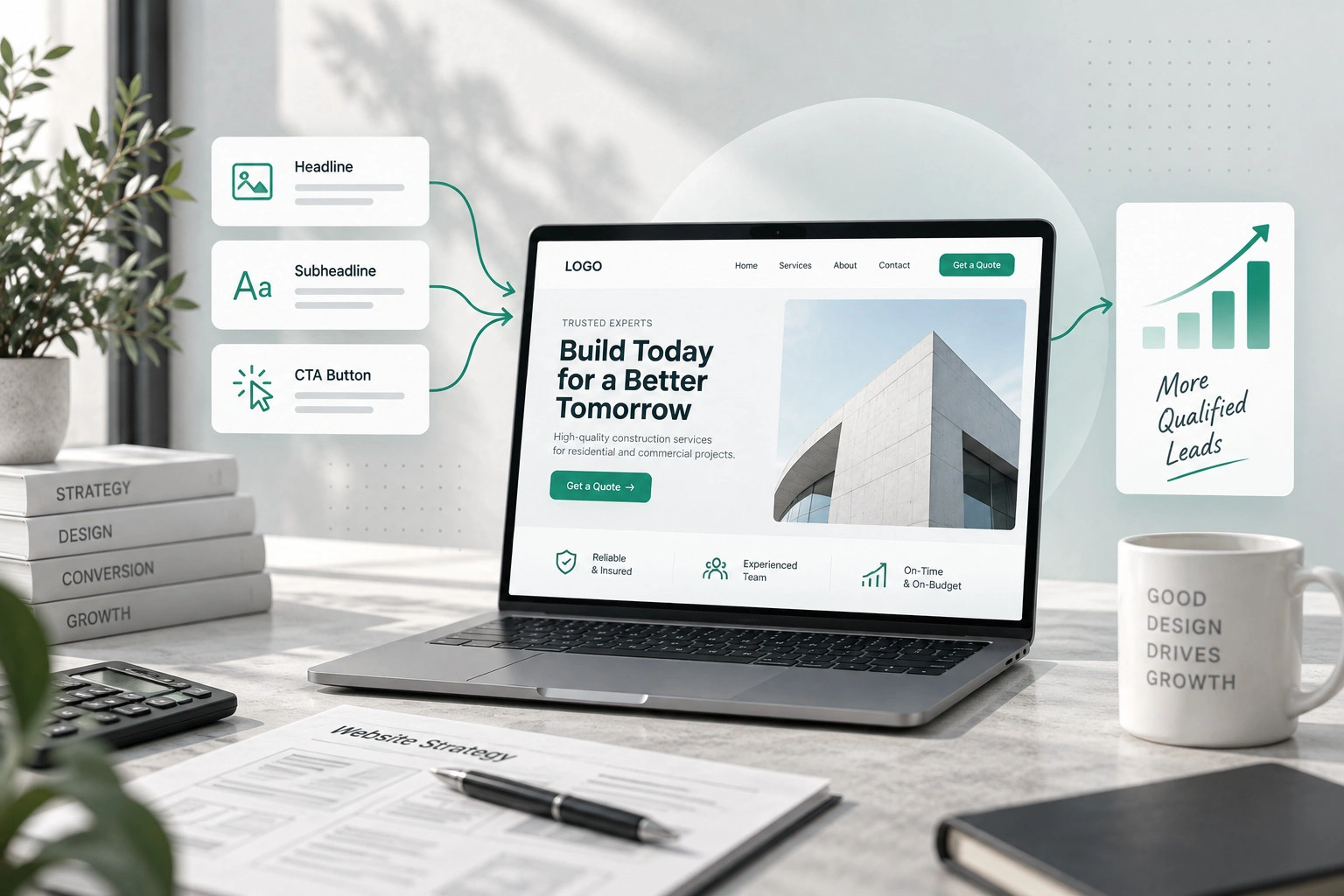
Clarity and impact: Your headline is the gateway to your landing page. It must therefore immediately attract attention and convey the essence of your offer. Keep it short and concise so that it resonates with visitors.
Address pain points: Identify the key problems or challenges of your target audience and address them directly in the headline. You can immediately pique visitors’ interest by highlighting how your product or service solves these problems.
Focus on the benefits: Highlight the main benefit for the customer. What change or improvement can they expect? Formulate the headline in such a way that the benefit for the customer is in the foreground.
Target audience: Tailor your headline so that it resonates with your specific target audience. Use language, tone of voice and a message that is tailored to their preferences, interests and desires. Personalization can significantly increase engagement.
Emotional appeal: Appeal to visitors’ emotions by addressing their desires, fears or hopes. A headline that evokes curiosity, excitement or a sense of urgency can encourage visitors to take a closer look at your offer.
Test and repeat: Don’t be afraid to experiment with different headline variations to find out what resonates best with your target audience. A/B testing can help you find the most effective headline and refine your message.
Keyword optimization: Include relevant keywords in your headline to improve visibility and search engine rankings. However, prioritize clarity and readability over keyword stuffing to ensure a compelling user experience.
Value proposition: Clearly articulate your unique value proposition in the headline to stand out from the competition. What makes your product or service stand out and why should visitors choose you over alternatives?
If you formulate a compelling headline that addresses visitors’ problems, highlights the benefits of your offer and appeals to your target audience, you can grab their attention when they arrive on your landing page and motivate them to keep looking.
Bullet points on the website hero section
Be brief and list the top 3-4 benefits that are tailored to your target audience. Remember that each new benefit dilutes the impact of the others, so stick to the essentials — no empty phrases — just hard facts, figures and real value.

Clear and concise messages: Each bullet point should succinctly highlight an important benefit or solution that your product or service offers. Avoid jargon or overly technical language that could confuse or put off visitors.
Tailored to the needs of the target audience: Tailor the benefits to match the problems, challenges and desires of your target audience. Consider market research or use feedback from your customers to ensure relevance.
Prioritize impactful benefits: Focus on the most compelling benefits that align closely with your target audience’s priorities. Highlighting too many benefits can dilute the overall message and overwhelm visitors.
Use data and numbers: By including statistics, metrics or case studies, you can add credibility to your claims and emphasize the tangible value of your offering. Quantifiable results are more convincing and help to build trust.
Address objections: Anticipate and address any objections or concerns visitors may have. For example, if cost is a common obstacle, emphasize the cost-saving benefits or return on investment.
Visual hierarchy: Present the bullet points in a visually appealing format and use typography, spacing and formatting to draw the reader’s attention. Use bullet points or icons to make the benefits easy to grasp and digest.
By crafting compelling bullet points that resonate with your target audience and effectively communicate the value of your offer, you can grab their attention and motivate them to learn more or take action.
Call-to-action block with form
Make it easy and tempting for your visitors to sign up and offer a bonus as a treat. Whether it’s same-day delivery, an additional service or exclusive market insights, make sure your CTA doesn’t put any pressure on them.

Clarity and visibility: Your CTA should be clearly visible and clearly articulated to ensure visitors understand the desired action. Use contrasting colors, bold typography or visual elements to make the CTA stand out.
Action-oriented language: Use compelling language that encourages the visitor to take immediate action. Phrases like “Get started”,” “Sign up now” or “Request your free trial” convey a sense of urgency and compel visitors to act.
Benefit-oriented: Emphasize the value or benefit that visitors will receive if they click on the CTA. Whether it’s access to exclusive content, a free consultation or a limited time offer, communicate clearly what’s in it for the visitor.
Minimize friction: Optimize the conversion process by minimizing the steps required to complete the action. Where possible, reduce the number of form fields or offer alternative contact methods, such as a click-to-call button for mobile users. Ideally, use a form with only one field.
Visual cues: Use directional cues such as arrows or visual elements that point to the CTA to draw visitors’ attention and encourage interaction. Visual cues can help direct the eye to the desired action and increase the click-through rate.
A/B testing: Experiment with different CTA variations, including text, design and placement, to determine the most effective combination. A/B testing allows you to gather data and insights to optimize your CTA for maximum conversion.
Offer incentives: Encourage action by offering incentives or rewards for clicking on the CTA. An incentive can increase motivation and boost conversion rates, whether it’s a discount code, free download or bonus content.
Regular optimization: Continuously monitor and analyze the performance of your CTA to identify opportunities for improvement. Optimize your CTA regularly based on user feedback, behavior and conversion data to maximize results.
And avoid the hard sell. Save the “buy now” button for e-commerce sites. People prefer to be in control of their decisions, so keep your CTA relaxed and inviting.
By applying these strategies, you can create a compelling call-to-action block that effectively motivates visitors to take the desired action and continue down the conversion funnel.
Use video block on the hero section
Invest in a high-quality video to engage viewers on multiple levels. Showcase your product in action, feature satisfied customers, or give a glimpse into your company’s solutions. Below are ideas for your 1st section’s video.

Captivating visual content: Videos are an effective medium for engaging visitors and conveying complex information in an understandable format. Use high-quality visuals, animations and storytelling techniques to grab visitors’ attention and keep them engaged.
Showcase your product or service: Show your product or service in action to give visitors a tangible understanding of its features, benefits and use. A demonstration video can help clarify common questions or concerns and build trust.
Testimonials from customers: Feature satisfied customers who talk about their experiences and success stories with your product or service. Testimonials provide credibility and authenticity, show real results and reinforce the value proposition.
Company story and values: Give an insight into your company’s ethos, mission and values to create a deeper connection with visitors. A video that showcases your company’s history, team members and community involvement humanizes your brand and fosters an emotional connection.
Educational content: Offer valuable insights, tips or how-to’s about your industry or niche to position your brand as a trusted authority. Educational videos can address problems, offer solutions and build a relationship with viewers.
Optimized length and format: Keep your video short and sweet and aim for a duration that keeps viewers interested without overwhelming them. Test different video lengths and formats to find out what resonates best with your audience.
Call to action: Include a clear call to action at the end of the video to prompt viewers to take the next step, whether that’s visiting your website, signing up for a demo or making a purchase. A well-placed CTA can increase conversion rates and move prospects further down the sales funnel.
By using video content effectively, you can increase engagement, build trust and boost conversion rates on your landing page. Experiment with different types of videos and monitor performance metrics to optimize your video strategy for maximum impact.
Brief social proof
Build trust and credibility by displaying reviews from satisfied customers or logos of well-known brands you’ve worked with. Authenticity is key here. See below for more ideas for this element.
Customer reviews and testimonials: Show authentic testimonials from satisfied customers highlighting their positive experience with your product or service. Add specific details such as names, photos and testimonials to create credibility and transparency. It can be 1-2 testimonials.
Endorsements from influencers: Partner with influential figures or industry thought leaders who align with your brand values and target audience. Their endorsements can lend credibility and authority to your offering, reach a wider audience and build trust.
Media mentions and awards: Highlight mentions in reputable media, publications or industry awards to show third-party recognition and validation. Display logos or badges prominently to convey authority and competence.
Customer logos and partnerships: Display logos of well-known clients, brands or partners you have worked with to convey credibility and trustworthiness. Association with reputable organizations can enhance your brand’s reputation and attract potential customers.
Social media followers and engagement: Show the number of followers, likes, shares and comments to demonstrate a solid and engaged community around your brand. Social proof metrics show popularity, trust and social endorsement.
Customer Satisfaction Ratings: Display customer satisfaction ratings, reviews or Net Promoter Score (NPS) to gage customer sentiment and loyalty. Positive ratings and feedback reassure potential customers and strengthen trust in your brand.
By using social proof effectively, you can build trust, credibility and confidence in your brand, which ultimately leads to more conversions and business growth. Experiment with different types of social proof and monitor performance metrics to optimize your strategy for maximum impact. However, there may not be enough space for the first section, so you can add the section below.
Remember friends, it’s all about grabbing attention and providing value from the start. So, let’s revamp your landing pages and watch the conversion rates skyrocket!
If you need help developing a bespoke website, get in touch with our team — we’ll find a solution to suit your needs and budget. If you’re budgeting for a landing page, see how much a landing page costs.
Before redesigning your hero section, check whether the rest of the page passes the basics. If the problems go beyond the hero, rework the hero as part of a full website redesign.
